
Your cart
There are no more items in your cart
Earthworms in the lawn: What to do
Categories :
Chronology
, Hobbies and insights
, Turf
Index
The earth cones produced by earthworms
What do earthworms do in the soil?
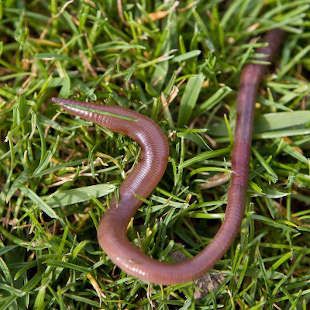
It would be very useful, therefore, to even out these heaps by means of a harrow or rake that flatten and redistribute the heap evenly on the lawn (a practice obviously to be done when the heaps are dry).
Aesthetically, the lawn loses its beauty due to these mounds which, among other things, make the turf difficult to use; However, if we recognize the great usefulness that these organisms have for the life of the soil, instead of asking ourselves how to eliminate earthworms in the lawn, we will ask ourselves how to limit the problem with means that are not harmful to the life of these soil allies.
Would you like to receive our advice? Subscribe to our Newsletter - 8% discount now for you
|
2. What do earthworms do in the ground?
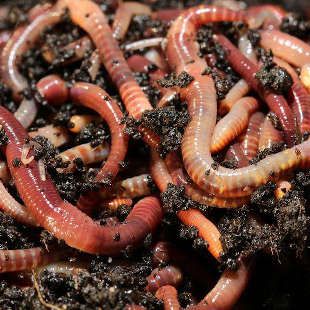 |
In one day an earthworm can eat and digest soil as much as their body weight, and this digest increases the nitrogen, phosphorus, potassium, magnesium and calcium content of the soil by 5-10 times as well as providing a high concentration of enzymes and organic substances produced by the intestinal flora of earthworms, which attack the undecomposed organic matter such as cutting and felt residues.
In addition, the improved chemical-physical characteristics of the soil as a result of the work of these allies, allow easier exploration by the roots.
3. What can we do?
Nothing that involves the death of these allies, at most limiting their activity: it seems that earthworms do not like very much subacid pH (i.e. from ph 6 to ph 6.5), which in this environment limits their activity. To this end, we suggest administering:
from 3 to 6 g per square meter, to keep the pH in that indicated range. The population of earthworms could also be reduced by using antagonistic fungi that are already present in nature, but certainly absent where this exaggerated population is found.
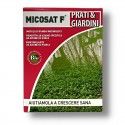
Two antagonistic fungi are Beauveria Bassiana and Pochonia Chlamydiosporia. Pochonia C. is present in Micosat Prati & Giardini, used mainly, and with excellent results, for the prevention and defense of fungal diseases typical of turfs. Beauveria B. is present in Klozer G 20, used for defense against beetle larvae, weevil larvae, larvae of Popillia Japonica.
These products are not chemical, nor toxic to humans and animals, they leave no residues, they control and create balance in nature, preventing one organism from becoming hegemonic to the detriment of all the others.
We have noticed that in meadows treated with Micosat P.&G. the presence of earthworms is never excessive and annoying, probably because the antagonistic fungus limits their excessive proliferation and also because the consortium of fungi and bacteria of the rhizosphere of Micosat P&G, promoting life in the biota and rhizosphere, manages to keep the soil oxygenated, with the consequence that the earthworm does not tend to rise because it has no difficulty breathing.
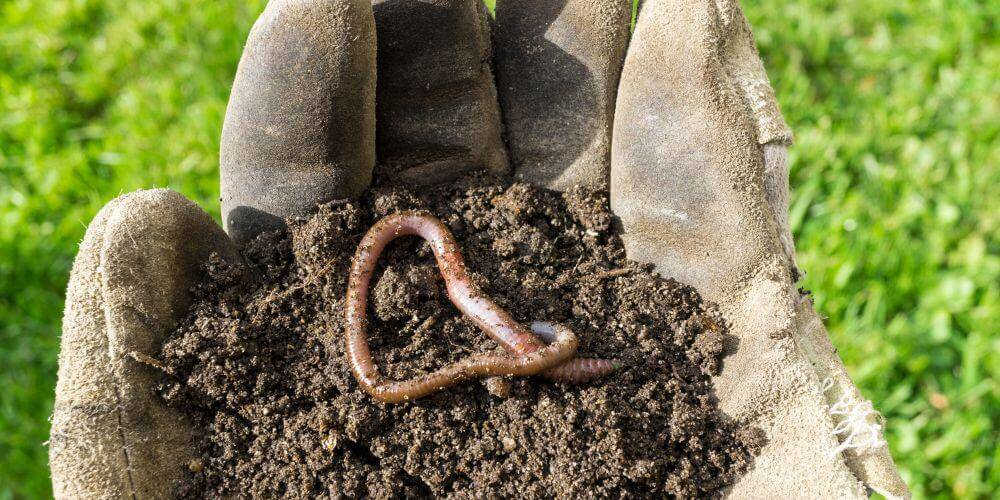
Earthworms, in fact, breathe through the skin that is in contact with the earth and take oxygen from it; therefore, when the earth is well oxygenated, earthworms do not come up in search of air, and consequently do not make heaps of digest.
Share this content



 Chronology
 Citrus fruits
 Turf
 Stone fruit
 Olive tree
 Ornamental
 Vegetables
 Actinidia (Kiwi)
 Screw
 Hobbies and insights
 Pome Fruit


