
Your cart
There are no more items in your cart
Care and Characteristics of Echeveria
Categories :
Chronology
, Ornamental
Index
Most common Echeveria disorders
Introduction
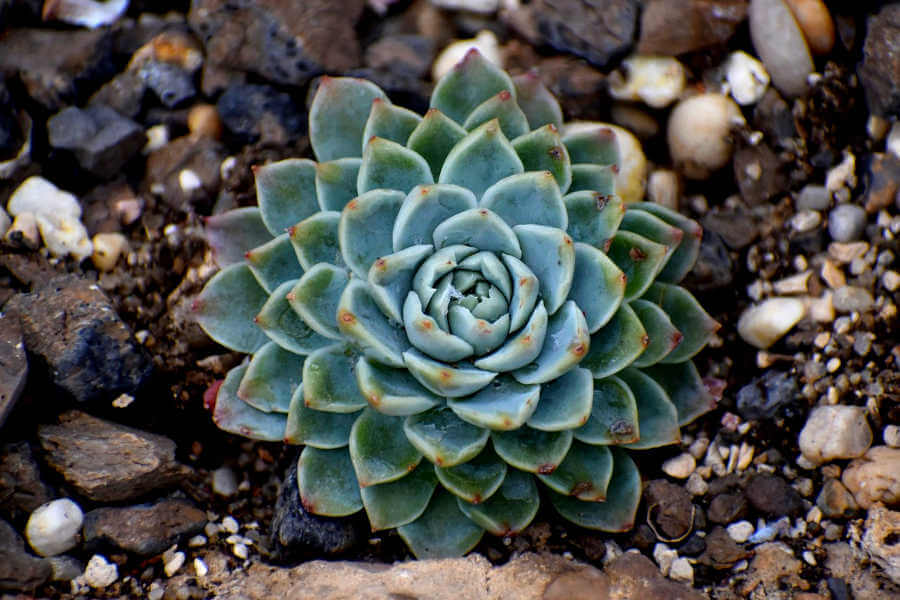
Echeveria is one of the most loved and cultivated succulents, thanks to its extraordinary beauty and its ability to adapt to multiple environments. Belonging to the Crassulaceae family , Echeveria is named after the Mexican botanist Atanasio Echeverría, and is native to the desert areas of Mexico and South America. Characterized by compact rosettes, fleshy leaves and a wide range of colors ranging from green to blue to red, this succulent plant is prized for both its hardiness and its ornamental qualities**.
In this article, we will analyze the characteristics of Echeveria, how to cultivate and treat it, the main pathologies to which it can be subject, and we will answer some of the most common questions related to its treatment.
Characteristics of Echeveria
General description
Echeveria is a perennial succulent plant that develops into rosettes of fleshy, thick, waxy-looking leaves. The size of the rosettes can vary greatly, ranging from a few centimeters to over 30 cm in diameter, depending on the species and growing conditions. The leaves, usually arranged in a spiral, vary in color from green to grayish-blue, and some varieties can even take on pink, red, or purple hues when exposed to a good amount of sunlight.
Clubs
During warm weather, many species of Echeveria produce bell-shaped inflorescences on long stems that extend above the main rosette. These flowers, usually in shades of red, orange, or yellow, add extra charm to the plant and are often an attraction for pollinating insects such as bees and hummingbirds.
Types of Echeveria
There are over 150 species of Echeveria, each with its own aesthetic peculiarities. Some of the most popular include:
- Echeveria elegans: Known as the "alabaster rose," it has light green leaves and produces small pinkish flowers.
- Echeveria agavoides: A species that resembles agave, with pointed leaves and often reddish edges.
- Echeveria 'Black Prince': Famous for its dark almost black leaves, this variety is very decorative.
- Echeveria pulvinata: Characterized by leaves covered with a light silver down.
Each species has its own peculiarities, but slow growth, longevity and resistance are common traits to all Echeverias.
Would you like to receive our advice? Subscribe to our Newsletter - 8% discount now for you
|
How to Grow Echeveria
Light exposure
Echeveria is a plant that thrives in full sun. It is essential to place it in an area where it can receive at least 6 hours of direct sunlight per day. Good sun exposure not only promotes healthy plant growth, but also intensifies its colors. In low-light environments, the plant tends to ethyolaze, i.e. to develop in an elongated and pale way, losing its compact shape and bright color.
For those growing Echeveria indoors, it is recommended to place it on a sunny windowsill, preferably facing south or west. In the winter months, when the light is less intense, it may be useful to use artificial succulent lights.
Potting soil and drainage
Echeveria needs well-drained soil , as it does not tolerate waterlogging. The ideal substrate is a potting soil for cacti and succulents, rich in sand and inert materials such as pumice or perlite, which help prevent moisture build-up. If you are using a universal potting soil, it is important to improve its drainage by mixing it with a significant percentage of coarse sand or perlite.
A good practice to ensure optimal drainage is to place a layer of gravel or stones at the bottom of the pot. Terracotta pots are particularly suitable because they promote the evaporation of excess moisture.
Watering
One of the most critical aspects of Echeveria care is water management. As a succulent plant, Echeveria stores water in its leaves and can withstand long periods of drought. It is preferable to water the plant only when the soil is completely dry, generally every 7 to 10 days in summer and much less frequently in winter, when the plant enters a vegetative dormant period.
A common mistake is to overwater, which can cause root rot. It is also important to avoid wetting the leaves, as standing water can promote the development of mold or mildew.
Fertilization
Echeveria does not require frequent fertilization. However, to stimulate growth and flowering, a fertilizer specifically for succulents can be administered once a month during spring and summer, diluted to half the recommended dose. In autumn and winter, it is best to stop fertilizing completely.
Repotting
Repotting Echeveria is done every two years or so, or when the plant has run out of space in the current pot. It is advisable to do this in spring, using a pot that is slightly larger than the previous one. During repotting, you can remove dry or damaged leaves and check the state of the roots.
Most common Echeveria disorders
Despite being a very hardy plant, Echeveria can be prone to a variety of conditions if not grown in the right conditions.
Root rot
Root rot is one of the most frequent problems and derives from an excess of water. The roots affected by this problem begin to rot, compromising the absorption of nutrients and leading the plant to rapid dieback. The first sign of rot is yellowing of the lower leaves and a general softness of the plant.
To prevent root rot, it is essential to:
- Use a well-drained substrate.
- Avoid watering too frequently.
- Choose pots with drainage holes.
If rot has already developed, the only solution is to take out the plant, remove the damaged roots and repot it in dry, well-drained soil.
Pests
The most common insects that can attack Echeveria are:
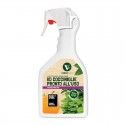
- Cottony mealybug: These small pests nest in the leaves and suck the linfa, weakening the plant. They can be eliminated with the use of a ready-to-use organic product of natural origin: Ko mealybugs
- Spider mite: This mite develops in dry environments and manifests itself as thin cobwebs on the leaves. To prevent its appearance, it is useful to occasionally spray the plant with a mixture of water and nettle macerate.
Fungal diseases
Powdery mildew is a fungal disease that manifests itself with a whitish coating on the leaves. This problem is caused by excessive humidity and poor ventilation. To prevent powdery mildew, it is important to ensure good air circulation around the plant and keep the soil dry. The most suitable product to treat powdery mildew is sulfur mixed in water, a biological product that acts exclusively by contact
Echeveria FAQ
How often should I water my Echeveria?
Echeveria should only be watered when the soil is completely dry. In summer, this can happen every 7-10 days, while in winter, when the plant is dormant, watering should be kept to a minimum, about once a month or even less.
What is the best potting soil for Echeveria?
- The best soil for Echeveria is for cacti and succulents, which ensures good drainage. You can improve the potting soil with sand or perlite to avoid waterlogging.
How can I make my Echeveria bloom?
- To encourage Echeveria to bloom, make sure it gets plenty of sunlight and provide a light fertilizer during the spring and summer. Flowering occurs mainly in summer, with inflorescences lasting several weeks.
Can I grow Echeveria indoors?
- Yes, Echeveria is very well suited to indoor cultivation, as long as it is placed in a very bright area . Ideally, a south- or west-facing windowsill should be used, where it can receive at least 6 hours of sunlight per day.
Is Echeveria cold resistant?
- Echeveria is not a plant that is resistant to intense cold. Temperatures below 5°C can seriously damage the plant, especially in the presence of humidity. It is advisable to keep it in a protected environment during the winter, away from cold drafts.
Share this content



 Chronology
 Citrus fruits
 Turf
 Stone fruit
 Olive tree
 Ornamental
 Vegetables
 Actinidia (Kiwi)
 Screw
 Hobbies and insights
 Pome Fruit


