
Your cart
There are no more items in your cart
The Doryphora and the Plants It Attacks: A Danger to Agricultural Crops
Categories :
Chronology
, Vegetables
Index
The Main Plants Attacked by the Doryphora
Damage Caused by the Dorifora
Control and Prevention Methods
How to Protect Vegetables from the Doryphora: Effective Treatments and Strategies
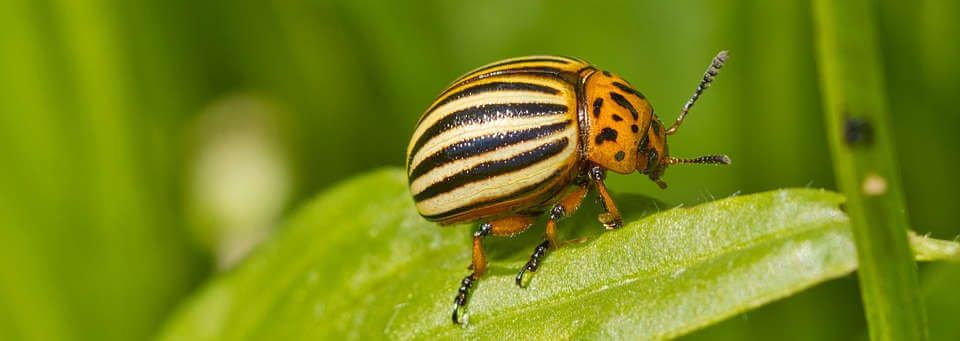
The doryphora (Leptinotarsa decemlineata), also known as the potato beetle, is one of the most feared insects by farmers, especially those who grow plants of the Solanaceae family. This pest, native to North America, has spread rapidly around the world, causing severe damage to crops, with a significant impact on agricultural production.
Throughout the article, we will explore which plants are most affected by the doryphora, what damage it causes , and how strategies can be put in place to control its spread and minimize damage.
The Main Plants Attacked by the Doryphora
1. Potato (Solanum tuberosum)
The potato is, without a doubt, the favorite plant of the doryphora. This insect feeds on the leaves of the plant in all its life stages, from larvae to adults. The attack occurs mainly during the warmer months, when conditions are favorable for the beetle's reproduction. The damage is visible to the naked eye - the leaves are completely devoured, leaving only the main veins. If left unchecked, the dorifora can cause devastating crop losses, up to the death of the plant. The larvae grow quickly feeding on the leaves, and in a short time, a population of doriphorus can compromise entire potato plantations.
2. Tomato (Solanum lycopersicum)
Although the potato is the main victim of the doryphora, the tomato is not immune to attacks by this pest. The tomato, like the potato, belongs to the Solanaceae family, and is attacked especially in periods when the doriphore population is particularly high. Again, the insect feeds on the leaves, and an infestation can severely weaken the plant, affecting fruit production.
In some areas, losses caused by doryphora in tomato crops can be significant, especially in the absence of effective control strategies.
3. Eggplant (Solanum melongena)
The eggplant is another plant that is strongly threatened by the doryphora. Farmers who grow eggplants must be especially careful during the warm season, when the dorifora is most active. The attack occurs mainly on the young leaves, which are devoured by the beetle's larvae. An attacked plant has leaves that are completely gnawed and can experience a significant drop in fruit production.
It is essential to intervene promptly with preventive strategies, in order to limit the infestation and save the crop.
4. Bell peppers (Capsicum spp.)
Although peppers are not among the most commonly attacked plants by the doryphara, in some cases, especially in conditions of overpopulation of the parasite, pepper plants can also be damaged. The doryphora tends to prefer other crops, but when food availability is scarce, it moves to other plants in the same family.
The consequences of the attack on peppers include the reduction of the plant's photosynthetic capacity, which results in a decrease in fruit production and quality.
5. Tobacco (Nicotiana tabacum)
Tobacco, belonging to the Solanaceae family, can also be attacked by the doryphora. This insect feeds on tobacco leaves, compromising the quality of the leaves that are used in the tobacco industry. Although the attack of the doryphora on this plant is not as widespread as on other crops, it can pose a significant problem in some areas of intensive cultivation.
6. Other Solanaceae
In addition to the plants listed, the doryphora can attack other plants belonging to the Solanaceae family, such as chili pepper and some ornamental varieties. However, the severity of the attack depends on the availability of more palatable crops such as potatoes and tomatoes.
Would you like to receive our advice? Subscribe to our Newsletter - 8% discount now for you
|
|
Damage Caused by the Dorifora
The main damage caused by the doryphora is the defoliation of plants. The larvae and adults feed on the leaves, destroying the leaf tissue and compromising the plant's photosynthesis. The consequent reduction in photosynthesis causes a decline in growth and, in severe cases, the death of the plant.
In addition, a plant weakened by the attack of the doryphora is more susceptible to other diseases and pests, creating a ripple effect that can devastate entire crops.
Control and Prevention Methods
To combat the doryphora, farmers use a combination of biological, chemical and cultural methods. Some of the most effective methods include:
Chemical treatments: The use of specific insecticides can rapidly reduce doriphora populations. However, it is important to avoid resistance to chemical treatments by alternating products with different active ingredients.
Crop rotation: Avoiding the cultivation of Solanaceae plants in the same field for several consecutive years can reduce the presence of overwintering larvae in the soil.
Biological control: The introduction of natural predators of the doryphora, such as the ladybug or the predatory beetle Stethorus punctillum, can help to keep the parasite population under control.
Cultural methods: Manual removal of adults and larvae from infested plants can be an effective method in small crops.
How to Protect Vegetables from the Doryphora: Effective Treatments and Strategies
The potato doryphora (Leptinotarsa decemlineata) is one of the most dangerous insects for crops such as potatoes, eggplants and, in some cases, tomatoes. This pest can quickly destroy foliage, reducing the ability of plants to grow and produce healthy fruit. In this article you will discover the best treatments against doryphora to protect your vegetable garden, using natural and chemical methods.
Manual Monitoring and Removal
Before proceeding with the use of insecticides, it is important to do regular monitoring of the plants. In small gardens, you can manually remove larvae and adults of doryphora from the leaves, also removing the yellow eggs present on the underside of the leaves. This method is environmentally friendly and useful for preventing large-scale infestations.
Biological Treatments Against Doryphora
If you prefer a natural and sustainable approach, there are several organic solutions to eliminate the doriphora from your vegetables, we offer you a series of strategies that can be alternated.
Bacillus thuringiensis: A naturally occurring bacterium that specifically attacks doriphora larvae. It is ideal for use in the early stages of infestation. Safe for the environment, it has no negative effects on beneficial insects.
Recommended intervention:
Control Dmp acidifier water improver,
Xentari (or Lepinox without a license),
Frankyl = organic fertilizer based on stillage with repellency action doors.
or:
Neem Oil: A natural insecticide derived from the Neem tree. Azadirachtin, the active ingredient in Neem oil, acts as both a growth inhibitor and a repellent for the doryphora.
or:
Spinosad (license required) : A very effective organic product against doryphora larvae, safe to use in organic farming. However, it should be applied with caution so as not to harm bees and otherpollinating insects.
Chemical Insecticides to Control Doryphora
If the infestation is advanced, chemical insecticides may need to be used. Among the most effective are:
Acetamiprid: Another systemic neonicotinoid, rapid in eliminating insects. It is a viable option for medium-term treatments.
Lambda-cyhalothrin: A fast-acting pyrethroid, effective for fighting doryphora, but should be alternated with other active ingredients to avoid the onset of resistance.
Prevention and Ecological Management Strategies
For effective and long-lasting protection of vegetables, it is advisable to adopt an integrated approach that combines several strategies:
Crop rotation: Alternating dorifora-sensitive crops, such as potatoes and eggplants, with other non-host plants reduces the accumulation of the pest in the soil.
Insect nets: The use of nets can prevent adults from laying eggs on plants, thus reducing infestation.
Mulching: A good layer of mulch around the plants can deter the dorifora from reaching the plants.
Antagonistic insects: Encouraging the presence of beneficial insects, such as ladybugs and natural predators, can help keep the doryphora population under control in a natural way.
Here are some of the most effective:
Ladybugs (Adalia bipunctata and Hippodamia convergens): These predatory beetles feed on the eggs and larvae of the doryphara, helping to reduce infestations.
Chrysopidae (Chrysoperla carnea): The larvae of lacewings, called "aphid lions", are voracious predators that attack the eggs and young larvae of the doryphora.
Entomopathogenic nematodes (Steinernema carpocapsae): These nematodes are used to infect and kill doryphora larvae present in the soil.
Tachinids (Myiopharus doryphorae): These gnats are parasitoids that lay their eggs on doriphora larvae, causing them to die.
The combined use of these predatory and parasitoid insects, along with integrated management practices, can help keep doriphora populations under control in a biological and sustainable way.
Alternating Treatments to Avoid Resistance
One of the best practices for controlling the dorichora is alternating the products used. This reduces the risk of the dorifora developing resistance to insecticides, ensuring better results in the long term.
The doryphora represents a serious threat to the cultivation of potatoes, tomatoes, eggplants and other plants of the Solanaceae family. Its ability to adapt to different climatic conditions and the speed with which it can multiply make this beetle a difficult pest to manage.
However, with the adoption of integrated control strategies and the use of preventive techniques, it is possible to limit damage and protect crops. Farmers must remain vigilant and intervene promptly, monitoring infestations and applying appropriate treatments.
Share this content





 Chronology
 Citrus fruits
 Turf
 Stone fruit
 Olive tree
 Ornamental
 Vegetables
 Actinidia (Kiwi)
 Screw
 Hobbies and insights
 Pome Fruit


