
Your cart
There are no more items in your cart
Fighting the zucchini virus
Categories :
Chronology
, Vegetables
Index
What plants does New Delhi attack
Would you like to receive our advice? Subscribe to our Newsletter - 8% discount now for you
|
|
Introduction
The Zucchini Virosis - ToLCNDV New Delhi Virus
With the changed environmental conditions, new pathologies replace and flank old pathologies, making defense or prevention more complicated.
The zucchini virus New Delhi Virus, technically ToLCNDV , is a young strain, identified in India in 1995 and arrived in Italy in 2015, which cannot be controlled with traditional pesticides. In fact, new strategies and different products are needed.
To move from host to host, like all viruses, bacteria and fungi, the zucchini virus uses wind and insects.
Among the vectors responsible for the propagation of this virus are mainly whiteflies, specifically Bemisia Tabaci, known as the vegetable whitefly, but also aphids and thrips.
Keeping these insects at bay is necessary to limit the spread of the virus.
What plants does New Delhi attack
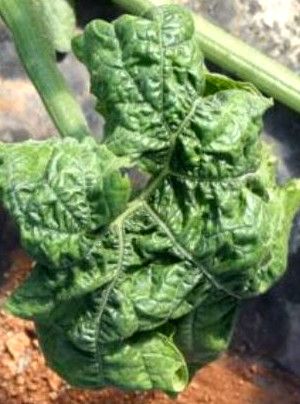
New Delhi attacks tomatoes, zucchini, potatoes, melon, watermelons and cucumbers. More substantial damage occurs on zucchini as it attacks and damages leaves and fruits.
A characteristic manifestation of this pathology is the closure of the leaves downwards and the loss of color, with a consequent loss of vigor of the seedling which drastically reduces production.
There is no real cure, nor specific fungicides or insecticides.
What is certain, however, is that a healthy and balanced nourished plant is much less vulnerable to attacks and damage from viruses.
Adopt good practices
We will start from the transplant to adopt useful measures:
First treatment of the seedlings in the alveoli before transplanting with:
- Shore at 300 ml/hl +
- Epik SL at 150 ml /hl +
- Karate Zeon at 150 ml/hl +
- MC Cream at 250 ml/hl
To the action against Shore viruses we add the action against thrips, whitefly and aphids of the two insecticides and the stimulating action of MC Cream.
After planting, carry out a treatment with
- Silver at 200 ml+
- Epik at 150 ml +
- Triplex at 250 gr +
- Mc Cream at 250 ml.
Considering the small size of the seedling, in order not to waste phytosanitary solution, also considering the cost, we can carry out one or two treatments performed with a backpack pump.
During the growth phase, it will be necessary to feed the seedling adequately to prepare it to face flowering and production with abundant energy. Zucchini has a high production potential, so it must be adequately supported and stimulated in its self-defense activity.
For this purpose, we suggest two products:
At the beginning of flowering, it is advisable to treat with
- Silver at 200 ml +
- Vitaseve at 500 ml +
- Triplex at 250 g.
Carry out subsequent treatments with
- Vitaseve at 500 ml +
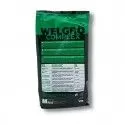
- Welgro Complex at 200 gr +
- Kendal TE 200ml +
- Redcal at 300 ml.
With this mixture we support flowering by integrating microelements and calcium and, if necessary, we can defend the plant from viruses and fungi with the addition of insecticides.
In addition to an accurate defense, nutrition is very important.
Excellent results are obtained by using fertigation in the first
a couple of times, to give phosphorus and nitrogen for a robust start of the seedlings, as well as a strong correction of the limestone and pH of the soil.
Subsequent fertilization will then have to be decided based on the trend and phenological phase of the crop.
Stimulate flower emission
To stimulate the emission of flowers, it can be combined
- Fury at 10kg/ha
at the beginning of flowering and continue with 3-5 kg/ha. During harvesting, a second treatment with
- Biobacter and
- Silver.
Silver and Vitaseve are biostimulant fertilizers that essentially act on the lymphatic vessels to the benefit of the vigor, health and well-being of plants.
It is universally agreed that plant health is the first weapon of defense against fungal diseases and viruses in particular, but also from insects. Healthy plants are known to emit dissuasive signals and adapt their linfa in a way that makes it unpalatable to pests .
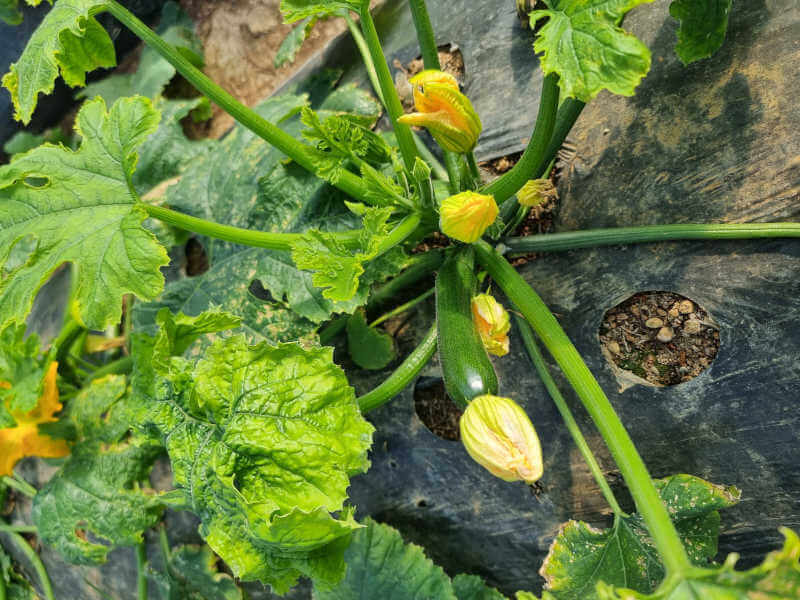
In the following photo you can see how, despite the attack of the virus, the harvest has not been compromised thanks to the treatments carried out.
Share this content








 Chronology
 Citrus fruits
 Turf
 Stone fruit
 Olive tree
 Ornamental
 Vegetables
 Actinidia (Kiwi)
 Screw
 Hobbies and insights
 Pome Fruit


