
Your cart
There are no more items in your cart
What is agricultural urea used for?
Categories :
Hobbies and insights
Index
What is agricultural urea used for?
How to distribute agricultural urea in the soil?
The limits of agricultural urea
Why agricultural urea is recommended by farmers

Agricultural urea (CON2H4) is a nitrogen fertilizer widely used in agriculture both for its advantages and for the variety of crops on which it can be used. In this article, we will explain what urea is used for in agriculture, what benefits it brings and what, however, are its limitations. Next, we will focus on some useful tips for its application.
What is agricultural urea used for?
As you know, agricultural urea is the fertilizer with the highest nitrogen content (46% nitrogen). Due to its ability to develop ammonia, urea is used as a soil fertilizer. Thus, once you have distributed it, the urea introduced into the soil will turn into ammonia and subsequently into nitric nitrogen.
But what is it for?
The main role of urea is to provide nitrogen to plants, which is subsequently used to increase production and quality characteristics, promoting more vigorous vegetative growth and encouraging the formation of new branches and new vegetation.
In addition, once inserted into the soil, agricultural urea is transformed first into ammonia salts (which provide the plant with reserve nutrition) and then into nitrates (which can guarantee immediate sustenance to your crops).
When is urea fertilized?
First of all, the application of fertilizer in the different phases of the crop cycle reduces the concentration of ammonia and the risk of volatization. Especially during vegetative growth phases, agricultural urea is particularly effective: applying it in spring or early summer, when plants require a higher supply of nitrogen, will serve to develop robust leaves and promote more vigorous growth.
How long does agricultural urea last in soil?
As we have already mentioned, the urea nitrogen contained in agricultural urea cannot be assimilated by the plant. Thus, in order to be absorbed, agricultural urea needs to be converted into nitric nitrogen. This kind of transformation depends on a number of factors, such as the type of soil. In arid soils, for example, the spread of urea is very slow and there are losses due to volatization. Moist soils, on the other hand, improve their spread.
How to distribute agricultural urea in the soil?
Our advice is to avoid distributing this particular type of nitrogen fertilizer during very hot and windy days, especially in the absence of rain forecasts.
If you distribute urea when you are sure that there will be rainfall in the short term, in fact, you will ensure a better distribution of fertilizer in the soil: rainwater, in fact, by making the soil more humid, will facilitate the fixation of ammonia, thus avoiding volatile phenomena and, therefore, product waste.
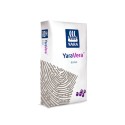
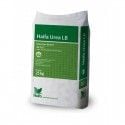
One of the products that is particularly used is
It is the best product on the market. The PRILLED structure ensures less volatilization and a more homogeneous distribution.
The limits of agricultural urea
Although agricultural urea is a historical product, still widely used today, it brings with it a big limitation. Farmers were used to using it when eco-sustainability was not an important principle for either agriculture or the ecosystem.
Let's think of the example of Spain, the spearhead of European and world agriculture, where the use of agricultural urea and other nitrogens is prohibited, precisely because of the pollution that these products cause in the aquifers.
As we can see, agriculture is undergoing important changes and it is our duty to keep up with the times and offer modern and innovative strategies.
Why is agricultural urea recommended by farmers?
As we have said, agricultural urea provides nitrogen into the soil. The characteristic of nitrogen is to provide a vegetative sprint to crops. However, these vegetative peaks are not always positive and must be related to the type of crop.
If, for example, we are talking about vegetables or fruit crops, nitrogen alone will not be useful to meet the general needs of the plant and, above all, could create imbalances due to excessive nitrogen administration.
As for turfgrass and/or hedges, the administration of agricultural urea could create vegetative peaks that could be compromised with adverse weather conditions, for example burns due to frost or too much heat.
If you find yourself in the condition of having to provide vegetative sprint, we recommend the use of ternary fertilizers complete with all the elements and that have a gradual release over time. This feature will serve to ensure a longer release of the elements, will avoid excess fertilization that can cause burns and, above all, will allow a more optimized agronomic yield.
Furthermore, while in the professional field urea is included in a precise fertilization program where, through various interventions, all the macro, meso and micro-elements are provided, in the habit of domestic use, on the other hand, a single fertilization is carried out.
It goes without saying that the supply of nitrogen through urea alone will not satisfy all the needs of the plant in this specific case. In addition, by intervening with urea, you run the risk of damaging your plant: agricultural urea has a very high nitrogen content and, if it is used at inappropriate doses, there could be burns and phytotoxicity.
In cases like this, if you have to fertilize vegetable gardens and small gardens, we recommend that you replace the use of agricultural urea with the use of fertilizer packages, the quantity of which is optimized for domestic needs, such as:
Again because of the limits that agricultural urea brings with it, the use of another type of urea, the technical one, is also widespread in agriculture:
What is the difference between agricultural urea and technical urea?
The first difference concerns the methods of administration of the two types of urea. If agricultural urea is given in fertigation, technical urea, on the other hand, is administered mainly by foliar application. In addition, technical urea has a low content of biuret, a harmful substance present in greater quantities in agricultural urea.
In the case of technical urea, you can use products such as UREA Tecnica LOW BIURET 46%.
In place of technical urea, if the field of application is hobby, you can use:
In addition to urea nitrogen, Agroleaf 31.11.11 contains other elements that are important and balanced for the vegetative phase of all crops
Share this content


 Chronology
 Citrus fruits
 Turf
 Stone fruit
 Olive tree
 Ornamental
 Vegetables
 Actinidia (Kiwi)
 Screw
 Hobbies and insights
 Pome Fruit


