
Your cart
There are no more items in your cart
What is potassium sulfate used for in agriculture?
Categories :
Hobbies and insights
Index
What is potassium sulfate used for plants?
What is the difference between potassium nitrate and potassium sulfate?
When to use potassium sulfate?
Would you like to receive our advice? Subscribe to our Newsletter - 8% discount now for you
|
|
Potassium sulphate (chemical formula K2SO4) is a fertilizer widely used in agriculture to provide plants with two fundamental elements: sulfur and potassium (essential, for example, for the resistance of plants to biotic and abiotic stresses and for the development of fruits).
What is potassium sulfate used for plants?
As we have already mentioned, potassium sulfate is a fertilizer based on sulfur and potassium, elements useful for some crucial functions.
But what are the advantages of the contribution of these two elements?
Sulfur has a double effect for plants:
- Nutrient/Fertilizer
- soil acidifier/corrective
Thanks to its acidifying function, acting as a soil corrective, sulfur lowers the pH of the soil (especially clayey, alkaline soils), thus helping the plant to:
- assimilate nutrients
- unblock phosphorus, potassium and water-soluble microelements in the soil
- Promote nitrogen nitrification
Potassium , on the other hand, together with nitrogen and phosphorus, is among the fundamental nutrients for plants, performing indispensable functions such as:
- increase plant resistance to biotic and abiotic stresses
- Improves fruit quality
What is the difference between potassium nitrate and potassium sulfate?
The main difference between potassium nitrate and potassium sulphate lies in their different composition and, therefore, in the different supply of nutrients to the plant. In fact, while potassium nitrate (KNO3) provides nitrogen and potassium at the same time, sulphate guarantees a combined supply of potassium and sulphur. A further difference has to do with the acidification action of the soil. Unlike nitrate, potassium sulphate lowers the pH of the soil, thanks to the presence of sulphur.
When to use potassium sulfate?
In addition to the contribution of these two elements, there is another characteristic that makes potassium sulphate an extremely used fertilizer. There are some moments in the life of the plant when it is possible to provide potassium exclusively in the form of sulphate, as a supply of nitric nitrogen associated with a drop in temperature could cause necrosis of the young tissues developed as a result of nitric fertilization.
Conversely, through the contribution of potassium sulphate , conductivity is increased, thus making the plant more resistant to low temperatures and stimulating the ripening and colouring of the fruits, as is the case for the cultivation of tomatoes in greenhouses in winter.
How to choose the most suitable type of potassium sulphate for your needs?
As we know, it is possible to provide nourishment to the plant in three different ways: foliar fertilization, fertigation or granular fertilization. The choice of the type of potassium sulphate to be used, therefore, must be made according to the type of fertilization.
If it is necessary to proceed with foliar fertilization, in the case of small areas and to avoid product waste (or in case of urgency to ensure a faster effect of potassium sulphate), the product we suggest is:
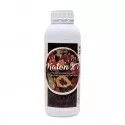
Katon XT promotes the setting, enlargement and maturation of the drupe. In addition, in addition to potassium, it provides iron, which is useful for the plant to improve the general color of the plant.
For fertilization by fertigation, in the presence of a large extension of the crop, our advice is to use:
Our advice is to use HAIFA Sop BIO in the last fertigation interventions, when the plants require greater quantities of potassium to complete ripening and to give more salinity to the product.
For hobbyists and amateur crops (such as, for example, gardening), Katon XT can also be a solution to be used dissolved in water by root
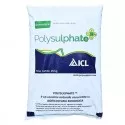
In the case of granular fertilization, you can proceed with a controlled release fertilizer:
In the latter case, in addition to providing potassium and sulfur, you will guarantee the plant a supply of magnesium, an essential element for photosynthesis, and calcium, which can significantly contribute to plant growth and promote root development.
Share this content

 Chronology
 Citrus fruits
 Turf
 Stone fruit
 Olive tree
 Ornamental
 Vegetables
 Actinidia (Kiwi)
 Screw
 Hobbies and insights
 Pome Fruit


