
Your cart
There are no more items in your cart
Japanese medlar Eriobotrya japonica: main adversities
By :
LA FROSCIA -
Categories :
Chronology
, Pome Fruit
Index
Scab and bacteriosis of the Medlar
How to act on the attack of thrips on loquat?
How to solve an aphid attack on loquat?
How do we solve a cochineal attack on medlar?
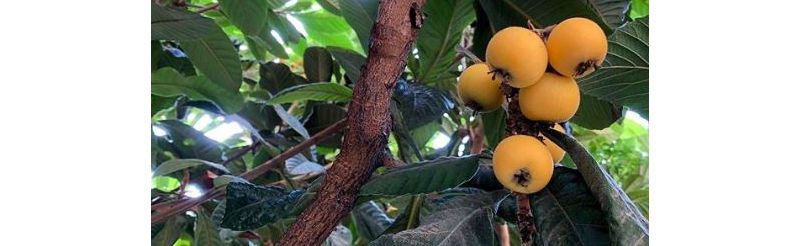
Introduction
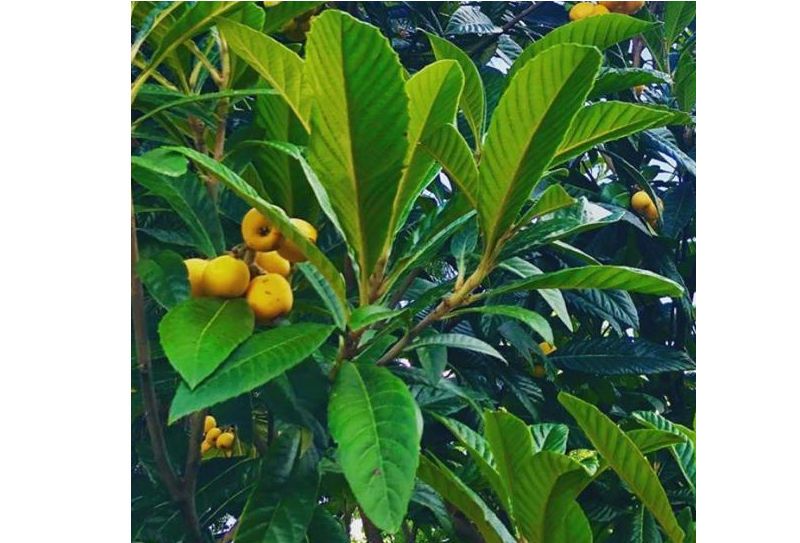
How nice would it be in summer with terrible heat to have some shade under a tree with a very thick foliage, which does not lose leaves in autumn dirtying everything and which shelters me from the wind in winter?
Well there is a plant like this, it is the Japanese Medlar.
Another characteristic is that it has flowers that last a long time so as to give color to the garden in autumn when the other plants begin dormancy. If this is what you are looking for, then the Japanese Loquat is just the right tree to plant in your garden.
WARNING: If the fruits reach excessive ripening on the plant, they will tend to fall off; The seeds contained in the fruits will germinate once they have fallen, causing other seedlings to grow at the foot of the mother plant. So we advise you to eat all the fruits and not to waste even one.
The Japanese Loquat is subject to both insect attacks and fungal attacks.
The worst fungal diseases of the Japanese Loquat are:
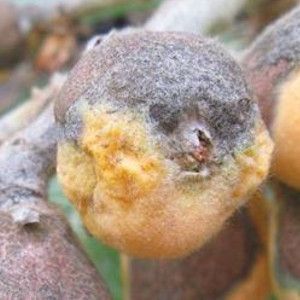
Scab and bacteriosis of the Medlar
Would you like to receive our advice? Subscribe to our Newsletter - 8% discount now for you
|
The favorable conditions for their development occur after a rain when the environment is humid; It is at that moment that we must act to safeguard our medlar.
The treatments to be carried out for users who do not have a license or who want to act with biological interventions that we recommend are:
- Kendal TE : it is a liquid product therefore easy to use. It is composed of 22% copper which has a disinfectant and curative action at the same time.
For conventional agriculture with zero residue we recommend this mixture:
- Biobacter : with a dose of 100 ml per hl
together with the
- Silver : with a dose of 200 ml per hl.
Biobacter has a peroxide as its component, which combined with Silver (anti-stress fertilizer containing zinc and silver) has a good anti-bacterial and anti-fungal action.
The advantage is that they can be used at all stages.
If, on the other hand, the plant is attacked by powdery mildew then we recommend using:
- AMYLO-X : at 250 g per hl and
- Tiovit Jet : at 300 g per hl
Fatal mixture because Tiovit tends to eliminate the parasitic fungus and Amylo-X tends to occupy the surface not allowing the fungus to return.
Now let's see which insects could attack our medlar.
How to act on the attack of thrips on loquat?
In the post-fruit set phase we must make sure to protect the plant because there is the possibility of attacks by thrips which, by sucking the linfa from the reproductive organs of the flower, lead to a miscarriage of the latter (in the most serious cases), or to the reduction of the size of the fruits due to the little nourishment that has arrived.
We can solve this situation with the following interventions:
- Laser used at 30 ml per hl, also allowed in organic farming
or with
- Success (for users without a license) with a dose of 80-120 ml per hl, also allowed in organic farming.
After the first intervention against thrips, it is necessary to constantly monitor and repeat it when the presence of the insect is restored.
These precautions must be taken until you get to the pinafore phase; After that, the insect will no longer give us problems.
How to solve an aphid attack on loquat?
Thanks to its leathery leaf, it is difficult for the loquat to be attacked by aphids, but it can happen and then our advice is to intervene
in BIO with
- Asset (natural pyrethrum): at a dose of 100-120 ml per hl
or with
- Mastro 50 : at the first appearances at a dose of 300 ml per hl (all parts must be wet well)
in Conventional Agriculture with
- Epik SL : at a dose of 200 ml per hl
or with
- Closer: at a dose of 30-40 ml per hl.
How do we solve a cochineal attack on medlar?
In the event that we are attacked by cochineal : with systemic action, we recommend using
With contact action we will defend ourselves with
- Cynoyl Z : with a dose of 500 ml per hl.
Very effective against the insects mentioned above is the intervention with Frankyl (a product allowed in BIO) at a dose of 250 ml per hl.
This has both a repellent action, so it will avoid an attack by these insects, and a nutritional one, going to feed the plant.
Share this content


 Chronology
 Citrus fruits
 Turf
 Stone fruit
 Olive tree
 Ornamental
 Vegetables
 Actinidia (Kiwi)
 Screw
 Hobbies and insights
 Pome Fruit


