
Your cart
There are no more items in your cart
Ficus Benjamina: The Versatile and Elegant Indoor Plant
Categories :
Chronology
, Ornamental
Index
Characteristics of Ficus Benjamina
Cultivation of Ficus Benjamina
Frequently Asked Questions about Ficus Benjamina
Introduction
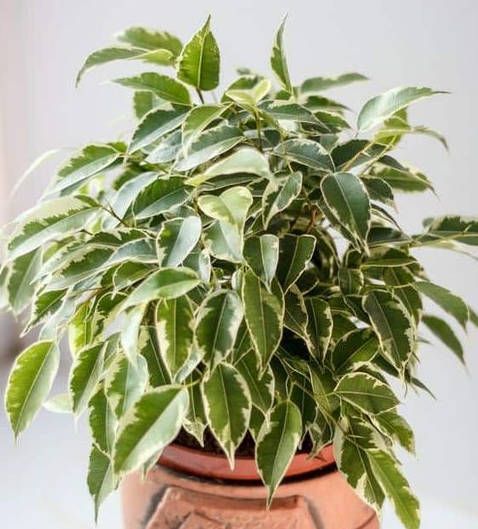
The Ficus Benjamina, commonly known as the Benjamin fig or simply the darling, is one of the most loved and cultivated houseplants. This plant belongs to the Moraceae family and is distinguished by its shiny, bright green leaves and elegant habit. Native to the tropical regions of Asia and Australia, the Ficus Benjamina has become a symbol of beauty and adaptability in indoor settings, making it a popular choice for both homes and offices.
 |
Characteristics of Ficus Benjamina
Appearance and Growth
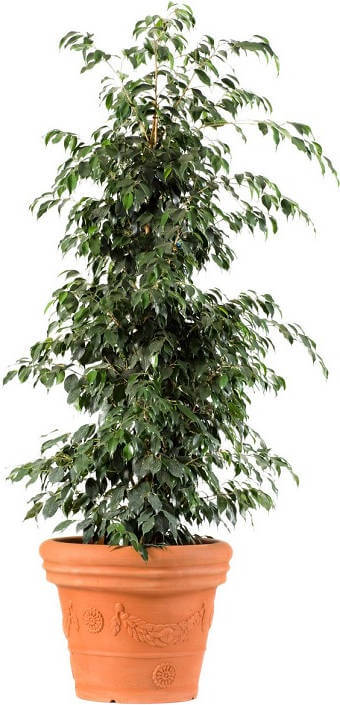
The Ficus Benjamina is a shrubby or arboreal plant that can reach considerable heights, reaching up to 30 meters in its natural habitats. However, grown in pots, it tends to grow between 2 and 3 meters. The plant has oval leaves, about 6-13 cm long, with a glossy surface and a color that can vary from bright green to dark green, sometimes with white or yellowish variegations in some cultivars.
Its elegant and light habit makes it ideal for growing in pots, where it can be shaped through pruning to take on different shapes, such as the classic tree with a single or braided trunk. The stem, at a young age, is light and flexible in color, while over time it becomes woody and dark.
Flowers and Fruits
Ficus Benjamina rarely blooms when grown indoors. In nature, however, it produces small yellow flowers within a structure called syconium, a particular type of inflorescence. The fruits that develop from the flowers are small yellowish berries, which turn red or black when ripe.
Environmental Benefits
Ficus Benjamina is known to be one of the plants that help improve indoor air quality. This plant is able to absorb some pollutants in the air, such as formaldehyde, benzene and trichloroethylene, thus helping to create a healthier indoor environment. In addition, like all plants, it absorbs carbon dioxide and releases oxygen through the process of photosynthesis, improving the well-being of people in space.
Cultivation of Ficus Benjamina
Light exposure
Ficus Benjamina is a plant that loves abundant but indirect light. It is preferable to place it in a bright area, avoiding direct exposure to sunlight, which could cause sunburn on the leaves. In low-light environments, the growth of Ficus Benjamina may slow down and the leaves may lose some of their brilliance and variegation.
Temperature and Humidity
Ficus Benjamina prefers an environment with temperatures between 18°C and 24°C. It does not tolerate temperature changes and drafts well, so it is important to avoid placing it near open windows during the winter or air conditioning sources. Humidity is another important factor: this plant comes from tropical climates and prefers environments with medium to high relative humidity. To maintain an adequate humidity level, it is recommended to mist the leaves with non-calcareous water or use a humidifier in drier environments.
Soil and Repotting
The ideal soil for Ficus Benjamina is a well-draining substrate, consisting of a mixture of universal potting soil, peat moss and sand. This combination allows good water drainage, avoiding water stagnation that can cause root rot. It is important to use a pot with drainage holes and place a layer of expanded clay at the bottom to help water run off.
Repotting should be done every 2-3 years, preferably in spring, when the plant shows signs of active growth. When repotting, you can lightly prune the roots to stimulate new root formation and improve the overall health of the plant.
Irrigation
Watering the Ficus Benjamina should be regular but moderate. The soil should be kept slightly moist, but never soggy. Before watering again, it is advisable to check that the surface layer of the soil is dry to the touch. During the winter months, watering should be reduced, as the plant enters a period of vegetative rest.
Particular attention must be paid to the quality of the water used: it is preferable to use water that is not calcareous or left to rest for a few hours, so that any chlorides evaporate.
Fertilization
To support the growth of Ficus Benjamina, it is important to provide a regular supply of nutrients. During the spring and summer period, it is recommended to fertilize every 2-3 weeks with a liquid fertilizer for green plants, rich in nitrogen, phosphorus and potassium. In autumn and winter, fertilization should be suspended or reduced, as the plant slows down growth.
Pruning
Pruning Ficus Benjamina is essential to maintain a harmonious shape and promote dense and compact growth. Pruning is carried out in spring, removing dry or damaged branches and shortening those that are too long. It is also possible to shape the plant to obtain a specific shape, such as the classic tree with a woven trunk. Regular pruning stimulates branching and helps keep the plant healthy.
Would you like to receive our advice? Subscribe to our Newsletter - 8% discount now for you
|
|
Common Issues
Leaf Fall
Leaf drop is one of the most common problems with Ficus Benjamina. This phenomenon can be caused by several factors, including:
- Temperature changes or cold drafts.
- Excess or shortage of water.
- Frequent plant movements, which cause stress.
- Lack of light.
To prevent leaf drop, it is important to ensure that the plant is placed in a suitable location and receives the necessary care.
Parasite Infestations
Ficus Benjamina can be prone to attacks by pests, such as aphids, mealybugs, and spider mites. In the event of an infestation, it is advisable to intervene promptly with biological remedies, such as a solution of water and nettle extract, or with the use of ready-to-use products such as Cifotris Bio.
Root rot
Overwatering can cause root rot, a condition that can lead to plant death. To prevent this problem, it is essential to use well-draining soil and water only when necessary.
Frequently Asked Questions about Ficus Benjamina
1. How can I propagate Ficus Benjamina?
The propagation of the Ficus Benjamina takes place mainly by cuttings. In spring or summer, cuttings of about 10-15 cm can be taken from the side branches, removing the lower leaves. The cuttings should then be soaked in a light substrate and kept moist until the roots develop.
2. Is Ficus Benjamina toxic to pets?
Yes, Ficus Benjamina contains latex, a substance that can be toxic if ingested by pets such as dogs and cats. It is advisable to place the plant in a place that is not accessible to animals to avoid possible health problems.
3. What to do if the leaves of the Ficus Benjamina turn yellow?
Yellow leaves can be the result of overwatering or nutrient deficiencies. It is important to control soil drainage and adjust irrigation. In addition, it is advisable to fertilize the plant regularly with Algatron during the growth period in spring.
4. What is the ideal frequency for watering Ficus Benjamina?
The frequency of watering depends on environmental conditions. Generally, it is sufficient to water once a week in summer and every 10 to 15 days in winter. Before watering, check that the top layer of soil is dry.
5. How can I maintain the shape of my Ficus Benjamina?
Regular pruning is key to maintaining the shape of the Ficus Benjamina. Removing dry branches and cutting off excess branches will help the plant develop harmoniously. You can shape the plant to the desired shape, such as a tree with a single trunk or braided trunk.
Share this content








 Chronology
 Citrus fruits
 Turf
 Stone fruit
 Olive tree
 Ornamental
 Vegetables
 Actinidia (Kiwi)
 Screw
 Hobbies and insights
 Pome Fruit


