
Your cart
There are no more items in your cart
What is copper oxychloride used for?
Categories :
Hobbies and insights
Index
Copper oxychloride: what it is used for
When to use copper oxychloride?
How is copper oxychloride used?
Copper oxychloride and copper hydroxide: the differences
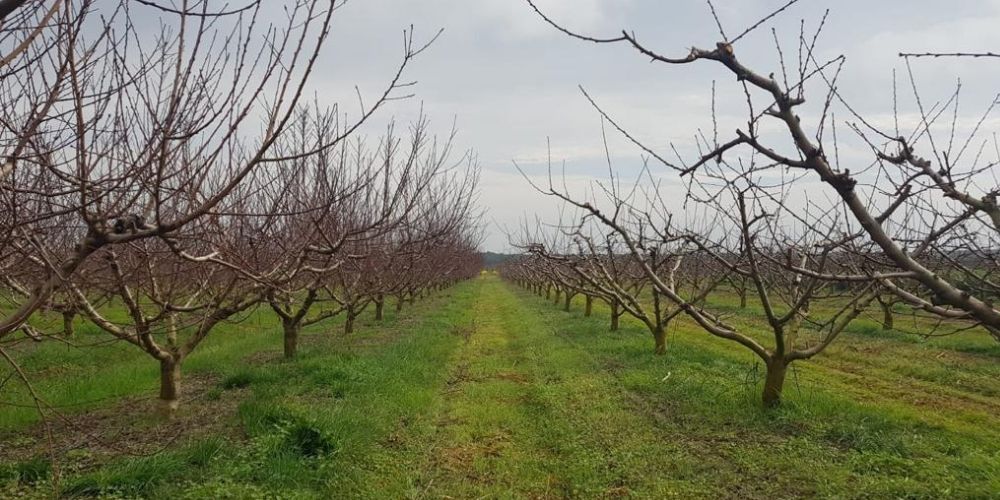
Copper oxychloride - chemical formula Cu2Cl(OH)3 - is an inorganic compound with a blue or dark green color (the color varies according to the hydration of the compound). It is widely used in agriculture as a fungicide for the prevention of numerous diseases.
In this article we will find out how, when to use it and what are the recommended dosages for its use.
Copper oxychloride: what it is used for
Copper oxychloride is an inorganic compound formed by copper, chlorine and oxygen. Usable on various crops, it manifests its advantages on pome and stone fruit by performing its fungicidal function in the presence of diseases such as scab, bacteriosis and corineo.
Copper oxychloride on olive trees
Copper oxychloride is particularly used in the olive growing sector.
Mainly in the post-pruning periods, when the bark that acts as a protective screen for the plant is cut, in fact, the branches are particularly prone to injuries and, therefore, susceptible to fungal attack.
Immediately after pruning operations, therefore, it will be necessary to close the wounds with pruning mastic or treat with copper oxychloride.
Would you like to receive our advice? Subscribe to our Newsletter - 8% discount now for you
|
|
When to use copper oxychloride?
It tends to be advisable to treat after each pruning. Whether it is olive trees, fruit trees or flowers, copper oxychloride will act as a prevention against attacks by pathogens that could exploit the wounds on the branches as a direct entrance to the plant.
In general, therefore, this fungicide is mainly used in prevention and during critical periods of a plant, such as:
- presence of harvesting wounds, hail or pruning on the plant
- Wounds on plants after leaf fall
- the occurrence of environmental conditions favorable to the development of pathogens
We suggest that you carry out the treatments when the plants face their vegetative rest phase (autumn-winter).
How is copper oxychloride used?
This specific fungicide can be found in various forms:
- Powder
- liquid
- in water-soluble granules
The dosage of copper oxychloride varies according to the concentration, the crop to which it is applied and the phenological phase of the plant. Therefore, our advice is to carefully read the label of the product you choose to use, taking care to respect the dosage indicated on the label.
The product we recommend is:
- Cupravit blue 35WG, copper oxychloride in water-soluble granules allowed in organic farming
However, one of the most significant limitations of oxychloride is that it acts only by contact and is not able, on its own, to remain for a long time on surfaces.
For this reason, our advice is to always use it in a mixture with bathers who guarantee protection from typical winter weather factors. For this, we recommend:
What is the difference between copper oxychloride and copper hydroxide?
One of the main differences between copper oxychloride and copper hydroxide concerns their respective composition. While the former contains copper, chlorine and oxygen, copper hydroxide, on the other hand, is composed of copper, oxygen and hydrogen.
Although copper oxychloride has always been one of the most widely used products, lately agriculture is moving towards the use of products with more advanced technology and capable, therefore, of achieving more effective results.
In fact, to make up for the limit of oxychloride of not being able to remain on plants for long, our experience leads us to recommend the use of a particular type of copper hydroxide:
Once in contact with the plant, Cobre Nordox is able to slowly release the cupric ions it contains inside. In addition, due to the small particle size, this product has a strong resistance against washout.
.jpg)
... OUR AGRONOMIST ANSWERS...
What is the difference between copper oxychloride and Bordeaux mixture?
These are two products used in agriculture with a fungicidal function. However, they differ in their composition. In fact, the Bordeaux mixture is composed of a low percentage of copper oxychloride (equal to 20%), but contains hydrated lime inside. Thanks to the addition of this compound, the Bordeaux mixture is also able to have an antibacterial effect.
What is the difference between copper oxychloride and copper sulfate?
In addition to being different in composition, the main difference between oxychloride and copper sulphate (copper + sulphuric acid) concerns their speed of action. Copper sulphate is able to release copper ions faster and, therefore, acts more.
Share this content
 Chronology
 Citrus fruits
 Turf
 Stone fruit
 Olive tree
 Ornamental
 Vegetables
 Actinidia (Kiwi)
 Screw
 Hobbies and insights
 Pome Fruit


