
Your cart
There are no more items in your cart
Rose diseases: Scab or Black spot of roses
Categories :
Chronology
, Ornamental
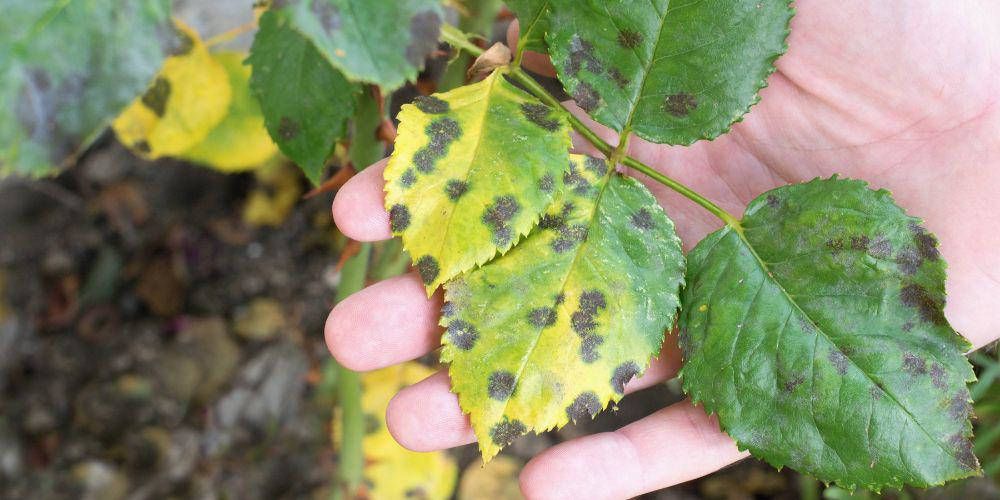
The rose, the queen of gardens, is the target of many fungal enemies such as powdery mildew or white mildew, rust, downy mildew, but also of insects such as aphids, mealybugs, spiders, weevils and lastly Cetonia.
Among the most common rose diseases within the "garden system", Scab stands out, a fungal disease also known as black spot of roses. In this article we will see together how to recognize it and how to fight it.
Index
Professional Management of Scab and Other Diseases of Rose Bushes in the Nursery
***
***
The most invasive rose disease that disfigures the beauty of the rose bush is certainly rose scab or rose black spot. Favorable climatic conditions for its development are mild climate and humidity, as well as very nitrogenous fertilizers.
The fungus responsible for scab is Diplocarpon rosae. Its virulence is favored by:
- temperatures close to 22-25 °C (therefore, spring-autumn)
- a high degree of relative humidity
- from over-canopy irrigation
- Rain or fog.
The spores of the fungus overwinter on the infected leaves and branches of the previous season that have fallen to the ground and, as soon as the climatic conditions are favorable, they rise by exploiting the veil of humidity that covers the plant, infecting the leaves in a few days.
It is therefore advisable to intervene in a preventive manner as soon as the conditions favorable to the fungus are created. The first treatments, from two to three, are the decisive ones because, if well done, (perhaps by wetting the soil under the plants with the fungicide solution) they can reclaim the area of the rose bush.
How to recognize rose scab?
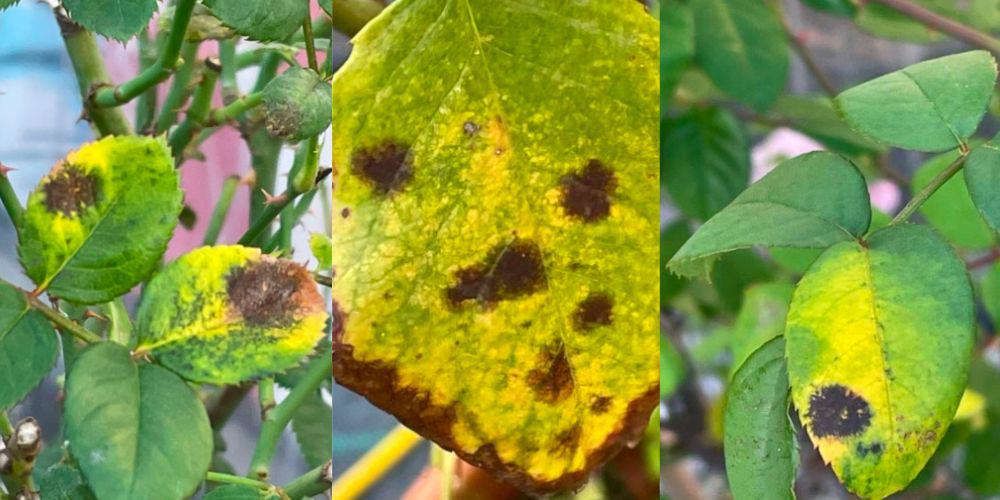
After only three days from the attack, you will notice black circular spots on the underside of the leaf, which could widen up to a diameter of 1 cm, assuming the serrated margin.
On massively affected plants, yellowing will be noticed on all leaves, followed by complete defoliation of the plant.
In extreme cases, the disease will also develop on the branches and trunk, which will have reddish-brown spots.
***
Would you like to receive our advice? Subscribe to our Newsletter - 8% discount now for you
|
***
As explained, it is always necessary to intervene preventively, without waiting to see the symptoms appear because at that point the damage will already be done.
Pruning also has its importance in preventing and limiting scab damage, because it creates spaces between branches that favor air circulation which in turn will lower humidity. Another very important aspect is to remove the pruned branches, whether small or large, on whose surface the spores nest.
To control Diplocarpon rosae we propose:
- Copper Sulfur Ferticus 3 (dosage: 20ml/10l)
It is a foliar fertilizer based on copper oxychloride, sulfur and manganese that strengthens the plant's defenses and cures nutritional deficiencies.
Alternatively, you can use baking soda or
... THE AGRONOMIST'S ADVICE...
Sodium bicarbonate and potassium bicarbonate, natural remedies for rose scab (and other fungal diseases), act on pH by creating unfavorable conditions for the proliferation of pathogenic fungi, such as scab.
However, the limitation of these products is the lack of persistence. Therefore, in the presence of conditions favorable to the development of fungi, such as rain, humidity and climatic changes, it will be necessary to treat at close intervals, less than a week.
A good strategy would be to alternate sodium hydrogen carbonate or potassium bicarbonate with:
In this way, we will be able to keep the plant free from white disease or powdery mildew, rust and downy mildew
In the event that it is necessary to intervene on an attack already in progress, it will be necessary to intervene with real fungicides capable of treating the disease:
- Cobre Nordox (dosage: 20-25gr/10 lt), organic abatement fungicide based on copper oxide
- Soybean Oil 85 Max (dosage: 20 ml/10lt)
It is important to take care to finely spray the solution on all parts of the plant
We would like to emphasize that balanced and constant nutrition is always a non-negligible component of the prevention of all diseases. For example, on a bimonthly basis, it will be very useful for each plant in the ground to administer:
***
***
Professional Management of Scab and Other Diseases of Rose Bushes in the Nursery
The management of roses is not limited to the domestic and hobby sphere; It is equally important to consider the professional and nursery aspect. In nurseries, two of the most aggressive diseases that affect roses are scab and rust. To deal with these pathologies at a professional level, we recommend the use of Difeconazole, applied at a dose of 30 ml per 100 liters of water.
Score Ec is effective in treating several diseases, including:
Powdery mildew (Sphaerotheca pannosa)
Scab (Marssonina spp.)
Rusts (Phragmidium tuberculatum, Uromyces caryophyllinus)
This product is also registered for use on carnations, to combat the same diseases. Using Difeconazole in nurseries ensures effective protection and healthy plant growth, ensuring the quality of the final product by reducing residues of the active ingredient.
To improve wetting, we recommend adding the Inex wetting mixture at a dose of 30 ml / hl.
Share this content


 Chronology
 Citrus fruits
 Turf
 Stone fruit
 Olive tree
 Ornamental
 Vegetables
 Actinidia (Kiwi)
 Screw
 Hobbies and insights
 Pome Fruit


