
Your cart
There are no more items in your cart
Growing parsley: the complete guide
Categories :
, Chronology
In this article we will talk about one of the best known aromatic herbs grown both in the garden and in pots: parsley. We will see together what its properties are, in which climate and under what conditions it grows best, and then focus on the main diseases of parsley. After talking about it, we will offer you the most effective solutions to combat them and have a healthy and developed parsley.
Index
- Parsley diseases
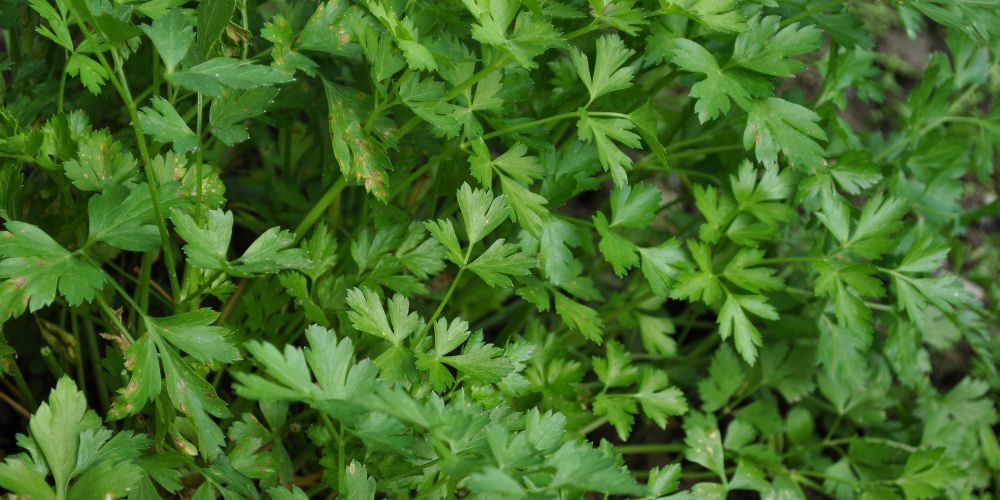
Before finding out how to grow parsley on the balcony or how to grow parsley in pots, let's see together the characteristics of this plant and what its benefits are.
Meanwhile, let's start by saying that parsley is an aromatic herb that does not require special care and growing it is very simple. In addition, in terms of quantity, the parsley plant produces abundantly and allows harvesting throughout the year (taking care to harvest 15 days after transplanting and after the plant has reached 20cm in height). Just like other aromatic herbs, parsley has various properties, ranging from digestive to antioxidant. This characteristic and the relative ease of cultivation make parsley one of the most common plants in any vegetable garden or balcony. But let's get more specific : what are the benefits of parsley? Whether you add it to infusions or to season your dishes, parsley remains a very rich source of:
- vitamin C
- riboflavin
- vitamin A
- mineral salts (e.g., calcium, iron, phosphorus and potassium)
- essential oils
After this brief introduction on the main properties of the plant, we will see together how to grow parsley at home or in the garden, taking care to specify the specific needs of the plant in terms of climate, soil, irrigation and sowing.
Would you like to receive our advice? Subscribe to our Newsletter - 8% discount now for you
|
|
How to grow parsley at home or in the garden
Parsley is a plant that is usually grown in the vegetable garden, making small furrows in the ground and distributing the seeds very close to each other. However, for those who do not have much space and for those who want to always have ready-to-use tufts of parsley available, choosing to grow this plant in pots is a valid alternative.
How to grow parsley in pots? Let's find out through the in-depth analysis of 4 fundamental points and phases:
- Climate
- Loam
- Sowing
- Irrigation
The Climate
To ensure that you grow parsley in pots at its best, it is very important that you know what its most favorable climatic needs are: parsley prefers a mild climate (with temperatures between 15 and 25°C). For this reason, the ideal is to place your potted parsley plant in a place that is not excessively exposed to light and that guarantees the plant an effective alternation between shade and sun.
The Soil
Although it is able to adapt to any type of soil, parsley prefers a fertile, medium-textured soil that is very rich in organic matter. Therefore, if you do not have any in the house that meet these characteristics, we recommend that you use:
- Humi natural bio, an organic soil with a high content of humic substances
Sowing
Considering that parsley seeds take about 2-3 weeks to germinate, our advice is to leave them immersed in water for at least 24 hours, before proceeding with sowing. When to sow parsley? Since it is a plant that is not afraid of frost, we recommend that you start sowing no earlier than April and continue, then, until July.
Attention! To help your parsley grow in the best possible way, our suggestion is to proceed with the application, once a month, of an organic fertilizer. If you do not already have a suitable fertilizer, then we recommend using:
- Black humus, rich in bacterial flora and nutrients, mixed with organic Humi natural soil
Irrigation
Irrigation is perhaps the fundamental step in the parsley cultivation process. Both in the summer and winter months, in fact, this plant requires a very frequent supply of water. Therefore, we suggest that you water at least once a day, in order to keep the soil moist at all times.
Let's now analyze what are the major diseases of parsley: we will see what are the symptoms felt by the plant and how to treat them.
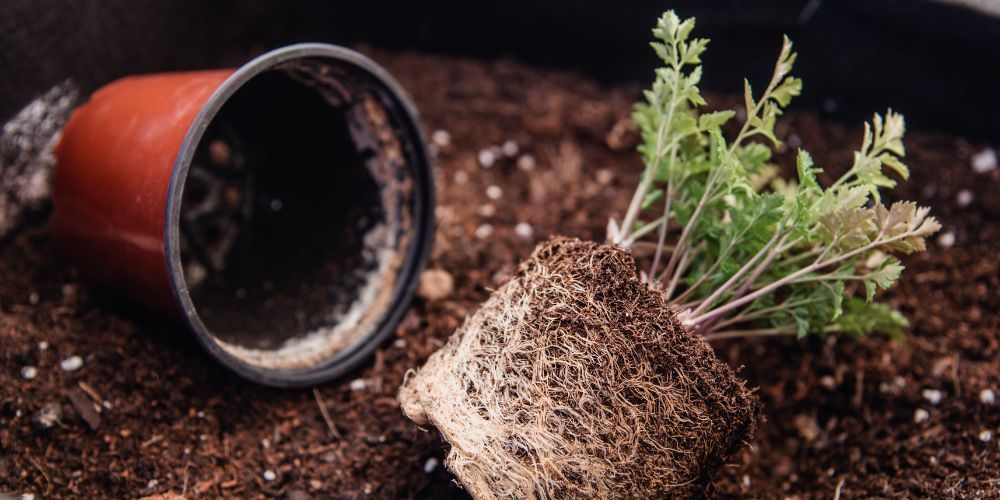
Among the diseases that affect this aromatic herb, the most common is the so-called "S.S. Parsley septoria: a fungal disease that occurs on the parsley plant during the summer. The Septoria fungus, in fact, survives the winter inside infected soils and seeds, and then appears in summer, when environmental conditions are favorable for its growth. In order to better combat Septoria, let's start with a fundamental question: how to recognize parsley septoria?
You will be able to recognize this disease by paying particular attention to the leaves, which initially have brown spots of different sizes. Inside the spots, you will notice the so-called pycnidia: small black dots, deposits of fungal spores.
Over time, the color of the spots will become grayish and the latter, converging with each other, will completely damage the leaf blade.
Our advice is to intervene with a copper-based resistance inducer, to inhibit the germination of fungal spores. As always, our team usually recommends organic products, for greater respect for the environment and the end consumer. For this reason, the product we recommend is:
- Kendal Tea, Dosage: 15ml/10L
Among the diseases of parsley , certainly the most common is septoria; a fungal disease that can only be treated with the active ingredient difeconazole that we find on the market under the name of Score Ec.
This intervention is reserved exclusively for professional users, as the purchase requires the possession of a phytosanitary license.
From tests conducted at an az. In the agricultural sector in the Sele plain in the province of Salerno, we have tested that targeted interventions with Score Ec mixed with the SiCa Barrier, have improved the shelf life in the post-harvest period, increased the specific weight and improved the leaf turgidity.
We remind you that the Perfarelalbero team is at your complete disposal! If you have any doubts, questions or curiosity, do not hesitate to contact us.
Share this content




 Chronology
 Citrus fruits
 Turf
 Stone fruit
 Olive tree
 Ornamental
 Vegetables
 Actinidia (Kiwi)
 Screw
 Hobbies and insights
 Pome Fruit


