
Your cart
There are no more items in your cart
Guide to PPE Safety Personal Protective Equipment
Categories :
, Chronology
Index
Disposable overalls or long-sleeved trousers and shirt
Would you like to receive our advice? Subscribe to our Newsletter - 8% discount now for you
|
|
Introduction
Using pesticides can expose us to chemical risks that are better prevented.
Depending on the toxicity of the pesticide to be used, we must take the necessary measures to ALWAYS be protected.
Even if new technologies try to increase the safety level of pesticides and help us eliminate the most difficult risks to manage, such as wettable powders that are increasingly replaced by WG formulations (Water dispersible Granules), we must always remember that we are handling POISONS.
We first of all must protect ourselves and protect ourselves adequately, let's see with what.
Main PPE (Personal Protective Devices):
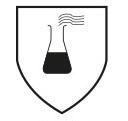
The minimum basic protection must guarantee the seal against splashes and liquids. This is guaranteed by all PPE belonging to the 3rd category that complies with Legislative Decree 475/1992. The pictogram to look for to be sure of buying a 3rd category product is the one shown below:
Chemical protection gloves
The main form of contamination and consequent poisoning by pesticides is related to contact with the hands.
Every time we open a package, it is very easy to come into contact with the contaminant. A pair of latex or nitrile gloves is not enough. Neoprene, nitrile rubber or butyl rubber gloves must be used with the chemical resistance pictogram that certifies the protection category.
MAPA Technic 450 Gloves
Protective masks
The second form of contamination concerns the respiratory tract.
There is only one way to protect ourselves effectively and that is by wearing a mask with specific interchangeable filters.
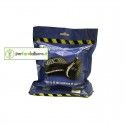
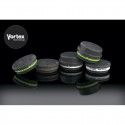
A1P3 filters for ELIPSE masks couple gas vapor smoke dust
In our case they are those that have the White and Brown colored band, where white indicates protection against dust, solid aerosols and toxic liquids. Brown indicates the type of gases that are organics with a boiling point > 65°C, solvents and hydrocarbons: (acetates, acids, acrylates, alcohol, benzene, ethanol ).
There are three types of masks with a replaceable or interchangeable filter:
- Half masks that protect only the upper airway
- Half-face masks that also cover the eyes
- In our opinion, full-face masks are the best solution that in addition to the eyes also cover the forehead for total and optimal coverage of the face
1) Elipse SPR503 Half Mask A1P3 Filters Included
2) ELIPSE INTEGRA SPR 401 Half mask with replaceable filters and visor
3) Full face mask with bayonet attachment BLS5600 (excluding filters)
All masks can only be used by those who do not have a beard because otherwise there would be no necessary seal.
For those with a beard, the use of an Electroventilated Helmet is a must.
Spectacles
Half masks do not protect your eyes from splashes and vapors that could irritate them.
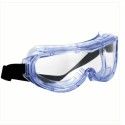
In this case, you must wear specific chemical-resistant and gas-tight glasses.
Safety glasses with neutral lenses
Helmet
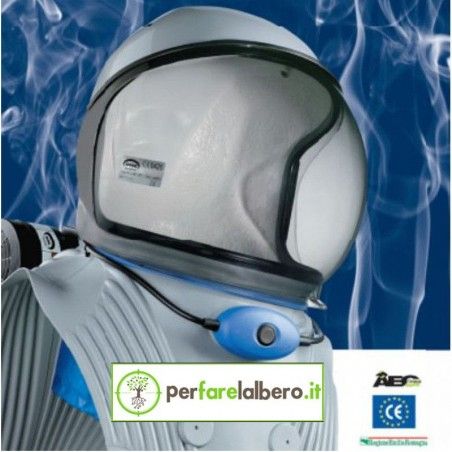
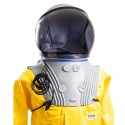
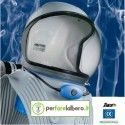
The most efficient solution to fully protect the operator's head is to use ventilated helmets.
Ventilated helmets have a high filtering capacity and are mandatory for those with a mustache or beard since the masks do not guarantee the seal.
They have often rechargeable batteries that power the ventilation inside the helmet.
Other models have a power supply that can be connected directly to the operating machine.
Helmets, like goggles, also have filters that must be replaced periodically.

Disposable overalls or long-sleeved trousers and shirt
Finally, it is necessary to cover arms and legs to avoid contact with the skin.
An economical solution that is easy to manage and certainly very effective is the use of a category 3 "DISPOSABLE" coverall.
There are six types where the lowest numbers indicate the highest level of protection.
Type 4, 5 or 6 guarantees liquid tightness and is sufficient in common phytosanitary practices.
Type 1 or 2 suits combined with self-contained breathing apparatus are suitable for closed environments such as greenhouses and are resistant to toxic gases.
As a substitute we can use long trousers and a long-sleeved shirt always of 3rd category.
This precaution is too often neglected, especially during the summer season, when temperatures are high.

Footwear
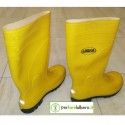
Avoid shoes made of absorbent materials as any splashes could contaminate us during subsequent uses.
It is better to use waterproof and chemical-resistant safety boots.
Precautionary statements
- Always check that the PPE is intact, without holes, tears or lacerations.
- Use the PPE suitable for the most toxic pesticide among those we are going to use.
- Avoid eating, drinking and smoking during the preparation of solutions and during the distribution of mixtures.
- Avoid accidental contamination by being careful when removing PPE, avoiding touching the forehead with the wrists of the suit, for example, or the face with gloves. It is also important to wash the gloves with soap before taking them off.
- Wash well after each use with neutral soap and let dry in the shade and in any case away from direct sunlight.
- Store PPE in a shelter, away from plant protection products or heat sources and from direct sunlight.
Share this content




 Chronology
 Citrus fruits
 Turf
 Stone fruit
 Olive tree
 Ornamental
 Vegetables
 Actinidia (Kiwi)
 Screw
 Hobbies and insights
 Pome Fruit


