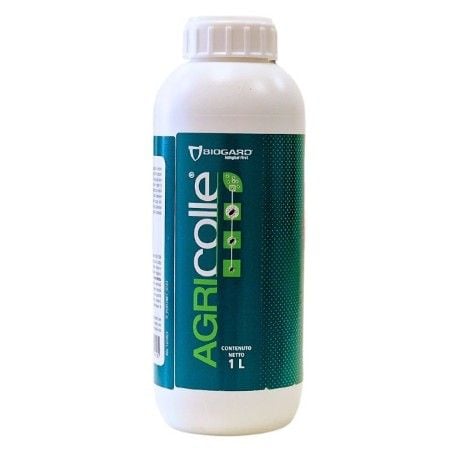
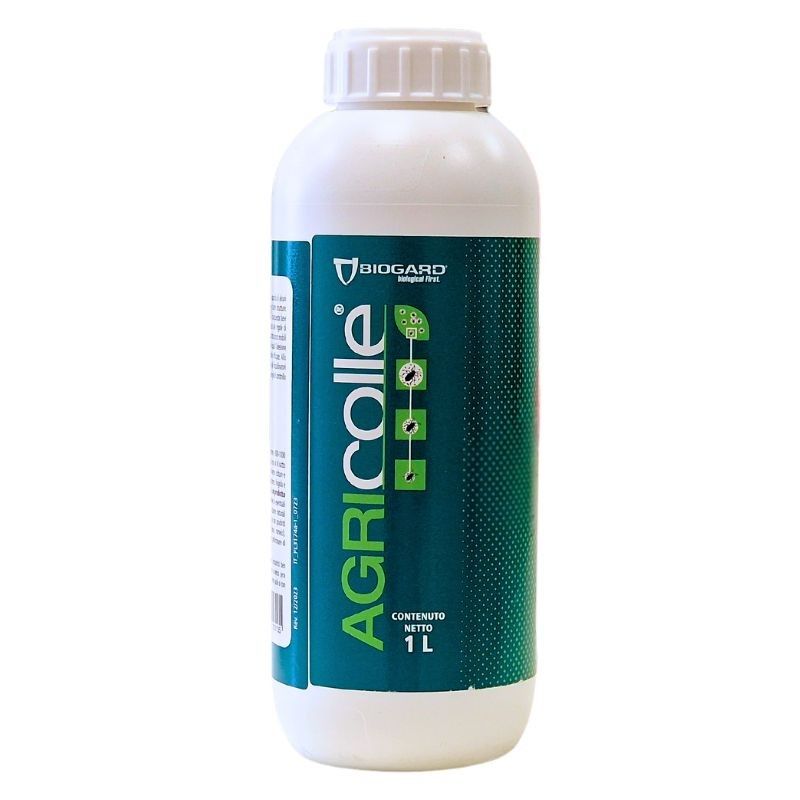
Agricolle Biorgard invigorating polysaccharide-based with physical action against some phytophagous. 1L
Agricolle Biogard is a product obtained from natural gelatines that exploits the characteristics of some polysaccharides to adhere specifically to the body of small insects on leaves and other structures. Its action is only physical, similar to that of an adhesive trap. The use of Agricolle in agriculture concerns insects and their stages of small size, not very mobile and with respiratory activity (e.g. aphids, juvenile forms of psylla, whiteflies) for which the adhesion of the micelles to the body and in particular to the respiratory openings is very effective. At the same time, its characteristics make it harmless to beneficial insects and pollinators that escape its physical action, making it a valuable tool in biological-integrated control strategies.
Composition:
Doses and methods of use:
- Tomato, pepper, eggplant, zucchini, cucumber, melon, watermelon, strawberry and small fruits, citrus fruits, pome fruits and other fruit trees and ornamental greenery (in greenhouses and in the open field): Use 300 ml/hl via foliar to fight aphids, whiteflies, psyllae, mealybugs, sciarids and other small arthropods.
Agricolle must be applied with an adequate wetting volume of not less than 800-1000 l/ha. In the case of a mixture with pesticides, the dosage/hl can be reduced, but not below 200 ml/hl