- -5%
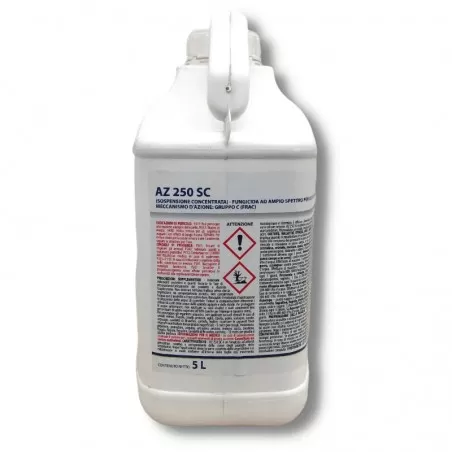
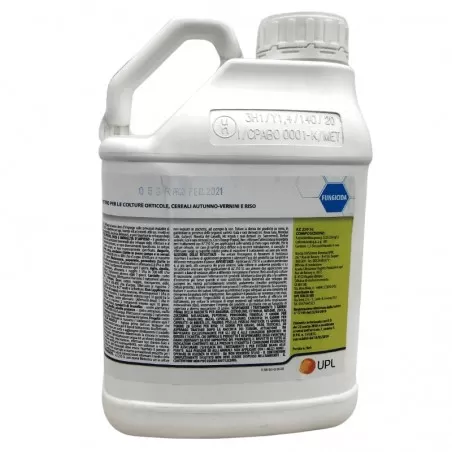
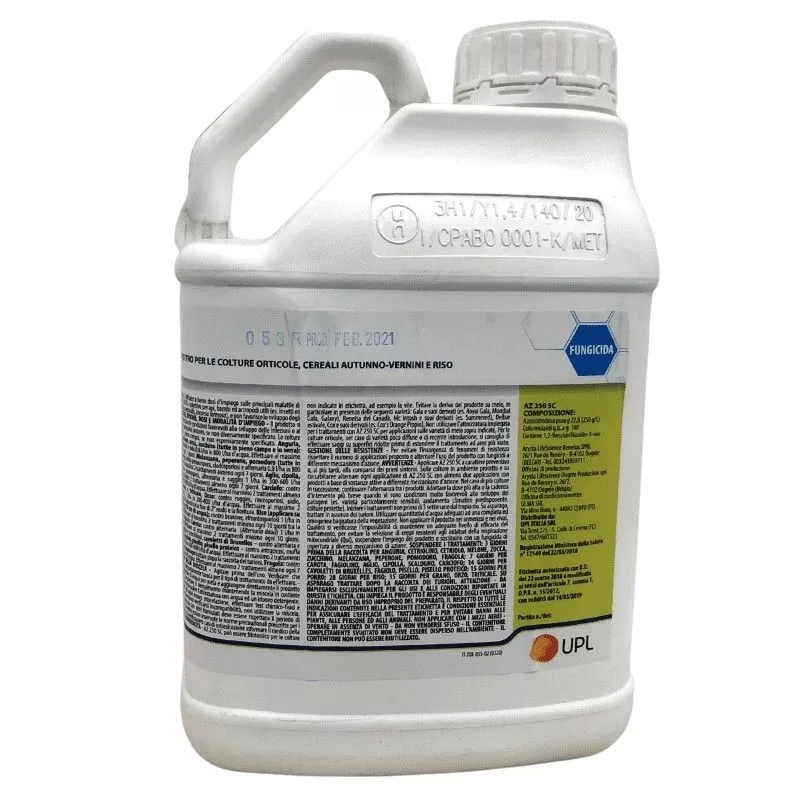
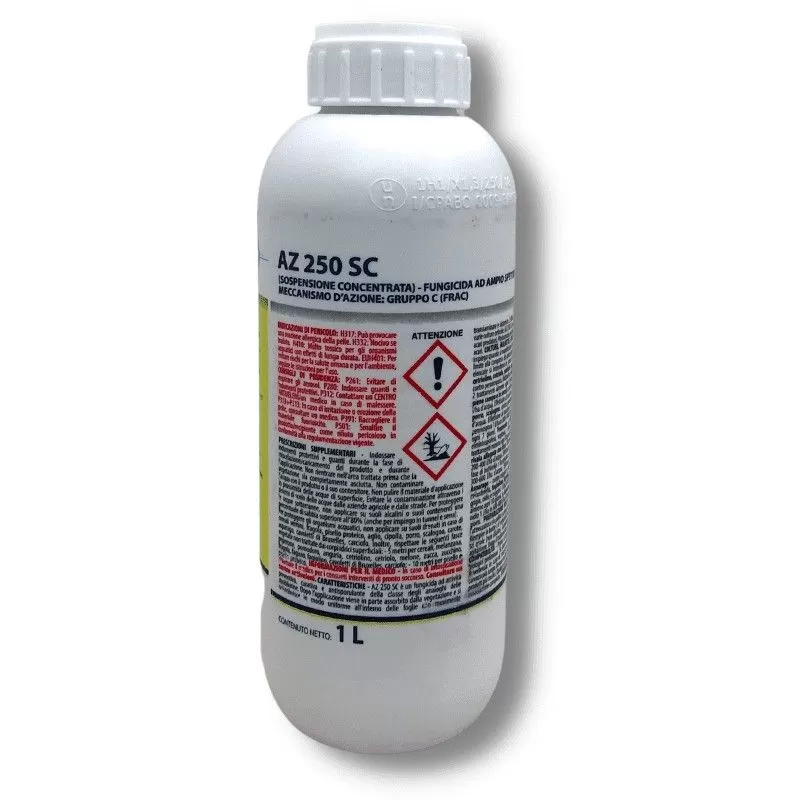
AZ 250 SC broad-spectrum fungicide for horticultural crops cereals autumn-winter rice
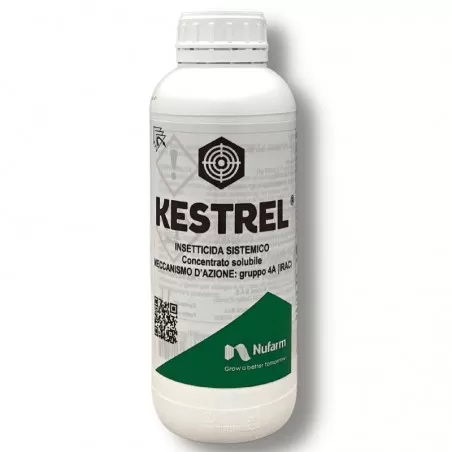
AZ 250 SC UPL fungicide with preventive, curative and antisporulant activity based on pure Azoxystrobin. Available in packs: 1 L bottle and 5 L tank - PATENTINO
AZ 250 SC fungicide is absorbed by vegetation and redistributes evenly within the leaves
- Systemic and translaminar activity
- Effective at low doses of use on the main diseases of various horticultural crops.
Use the product when conditions are favourable to the development of infections or the appearance of the very first symptoms
Composition:
Axozistrobin pure g 22.8 (250g/l)
Co-formulants to taste at 100 g
Ministry of Health registration n° 17149 of 22/03/2018
Use and doses:
WATERMELON, GHERKIN, CUCUMBER, MELON, PUMPKIN, ZUCCHINI (all in the open field and in greenhouses): 0.8 l/ha in 800 l/ha of water. Maximum number of treatments: 2 at least every 5 days+
EGGPLANT, PEPPER, TOMATO (all in the open field and in greenhouses): 0.8 l/ha in 800 l/ha of water. Maximum number of treatments: 2 at least every 7 days
GARLIC, ONION, LEEK, SHALLOT: 1 l/ha in 300-600 l/ha of water Max number of treatments: 2 at least every 7 days
ARTICHOKE: 1 l/ha in 800 l/ha of water. Maximum number of treatments: 2 at least every 7 days
WHEAT AND TRITICALE, BARLEY: 1 l/ha in 200-400 l/ha of water. Maximum number of treatments: 2 at a distance of 10 days between the 2nd node phase and the perforation.
RICE: Apply to flooded rice paddy with about 10 cm of water at a dose of 1 l/ha in 200-400 l/ha of water. Maximum 2 treatments 10 days apart between the barrel phase and the earing.
CARROT: 1 l/ha in 300-600 l/ha of water. Maximum 2 treatments 10 days apart.

- Active ingredient
- Axozistrobin
- Bremia lactucae
- Lettuce blight
- Pseudodowny mildew cubensis
- Cucurbitaceae blight
- Botrytis cinerea
- Gray mold
- Phytophthora infestans
- Mildew
- Alternaria solani
- alternariosis
- Alternaria alternata
- alternariosis
- Alternaria spp.
- alternariosis
- Downy mildew destructor
- Mildew
- Puccinia Allii
- Rust
- Phytophthora leeks
- Mildew
- Cladosporium fulvum
- Cladosporiosis
- Didymella bryoniae
- Didimella
- Alternaria leeks
- Alternaria
Carrot Alternariosis - Colletotrichum limdemuthiatum
- Anthracnosis
- Uromyces pisi
- Pea rust
- Mycosphaerella brassicicola
- Cabbage mycosphere
- Alternaria brassicicola
- Cabbage Alternaria
- Puccinia asparagus
- Rust
- Stemphilium vesicarium
- Stemphiliosis
- Septoria tritici
- Septoria
- Podosphaera xanthii - Sphaerotheca fuliginea
- Powdery mildew
- Erysiphe graminis
- Powdery mildew - cereal white sore
- Rhynchosporium secalis
- Rust
- Podosphaera aphanis
- Powdery mildew Strawberry
- Erysiphe fusoty
- Cucurbitaceae powdery mildew
- Puccinia graminis
- grain rust
- Puccinia striiformis
- Yellow rust
- Puccinia hordei
- Brown rust
- Puccinia simplex
- Brown Barley Rust
- Septoria nodorum
- Ear septoria
- Uromyces appendiculatus
- Bean rust
- Alternaria allii
- Garlic Alternaria
- Downy mildew schleideni
- Onion downy mildew
- Ascochyta pisi
- Pea anthracnose
- Blumeria graminis
- Powdery mildew or white wheat sickness
- Erysiphe polygons
- Pea powdery mildew
- Puccinia triticina - Puccinia recondita
- Brown Wheat Rust
- Helminthosporium sorokiniana
- Barley helminthosporiosis
- Puccinia leeks
- leek rust
- Helminthosporium oryzae - Cochliobolus miyabeanus
- Helminthosporiosis
- Piricularia oryzae
- Brusone da piricularia
- Erysiphe cichoracearum (Powdery mildew of Aster and Cineraria)
- Powdery mildew of Aster and Cineraria
- Alternaria leeks cichorii
- Salad alternations
- Colletotrichum limdemuthianum
- Bean anthracnose
- Erysiphe pisi
- Powdery mildew of legumes
- Helminthosporium sativum - Cochliobolus sativus
- Brown spotting
- Drechslera graminea - Pyrenophora graminea
- Brown Leaf Streak of Barley
- Helminthosporium teres
- Barley brown notches
- Bipolaris oryzae
- Akioki-Rice Helminthosporiosis
Be the first to ask a question about this product!