- -5%
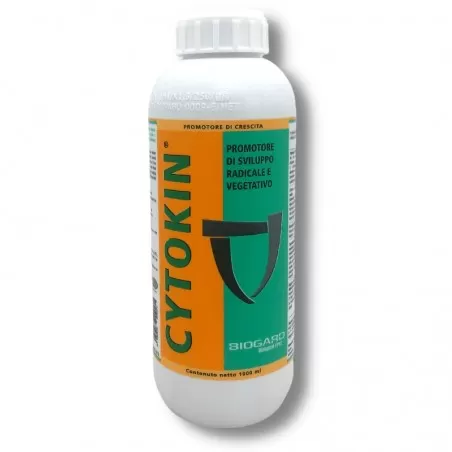
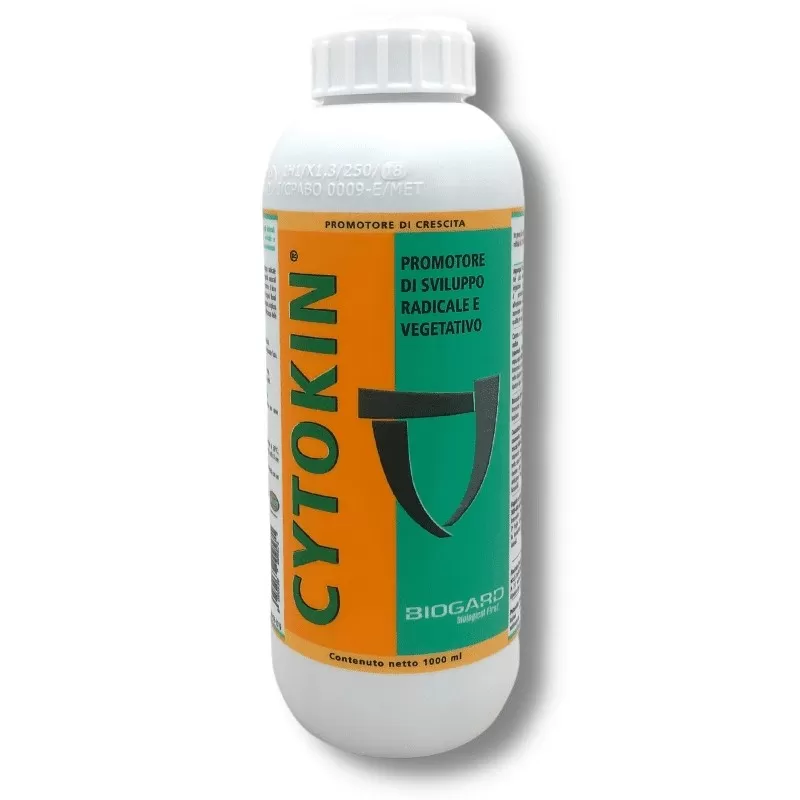
CYTOKIN promoter of vegetative development
CYTOKIN Biogard is obtained from plant extracts with a high content of natural cytokinins that also acts on the buds, resulting in greater budding synchrony. Packaging: 1 liter - 500 ml
SHIPPING
Promoter of vegetative and root development
CYTOKIN Biogard results in greater budding synchrony
Cytokin is made up of plant extracts with a high content of natural cytokinin precursors
The cytokinins present in CYTOKIN
- facilitate the formation of meristimatic buds and root development
- Improve cell division and differentiation
- Improve fruiting
- They delay the senescence of leaf tissues and fruits
- Limit apical dominance
- Reduce the number of buds that do not sprout on vine shoots
- They promote the development of buds at vegetative resumption
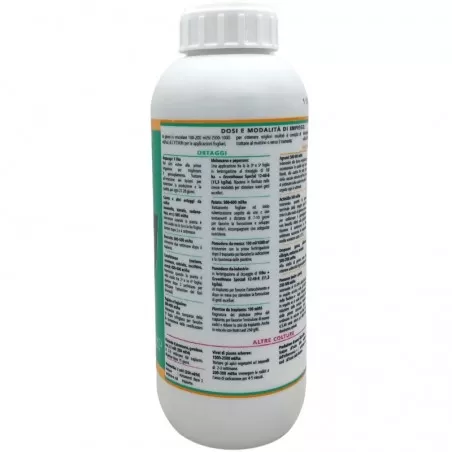
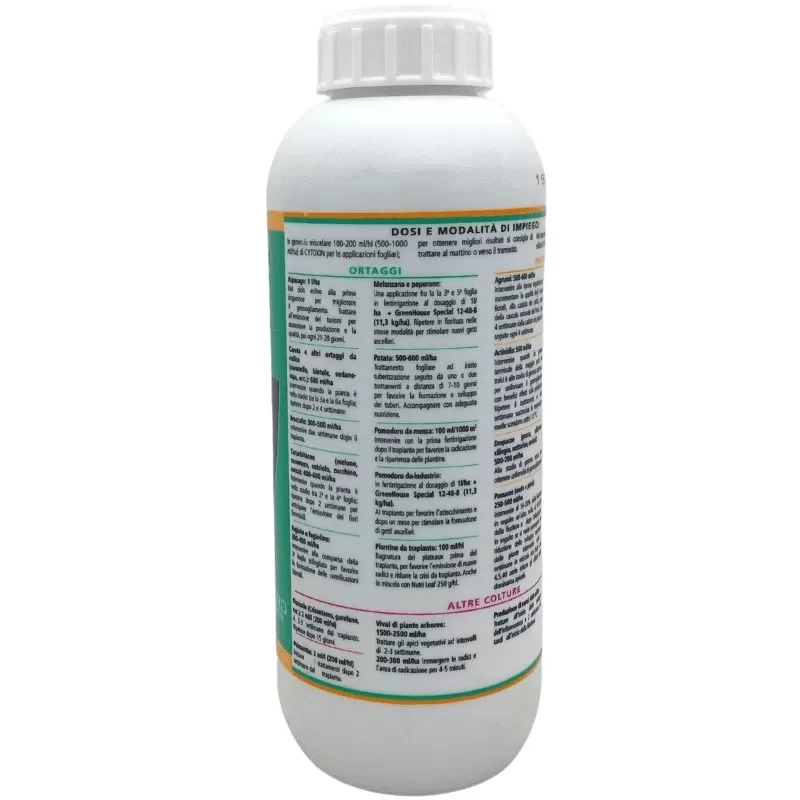
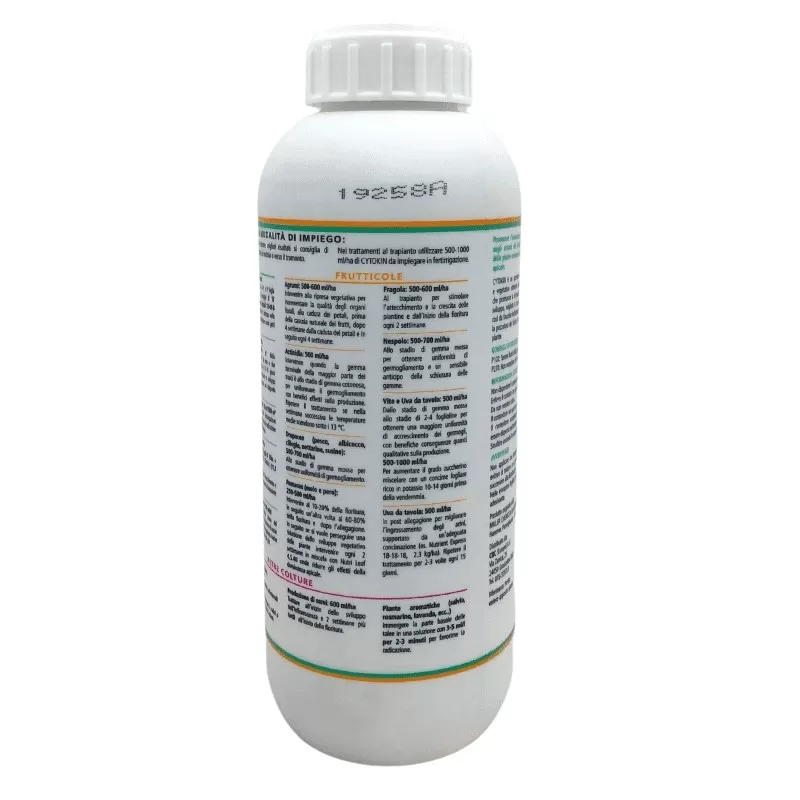
Mix 100-200 ml/hl (500 -1000 ml/ha) of CYTOKIN for foliar applications;
Treat in the morning or around sunset.
In transplant treatments, use 500-1000 ml/ha of CYTOKIN to be used in fertigation.
It is advisable to avoid treatment if rainfall is expected in the 8 hours following distribution.
In foliar treatments, Cytokin can be mixed with an adhesive. On horticultural crops (such as, for example, cucurbits) Cytokin can also be used radically.
CYTOKIN FOR VEGETABLES:
Cucurbitaceae: 400-600 ml/ha. The intervention is recommended when the plant is in the stage between the second and fourth leaves. To anticipate the emission of female flowers, it is recommended to repeat the interweaving after 2 weeks
Carrots and root vegetables: 600ml/ha
Asparagus: 1l/ha
Broccoli: intervene two weeks after transplantation, at doses of 300-500 ml/ha
CYTOKIN FOR FRUIT CROPS:
Kiwi: intervention is recommended when the terminal bud of most of the shoots is at the cottony bud stage. This intervention serves to standardize budding with positive effects on production.
Citrus fruits: 500-600ml/ha. The intervention is recommended at vegetative restart, at the fall of the petals, before the natural drop of the fruits, after 4 weeks from the fall of the petals and then every 4 weeks.
Strawberry: use Cytokin during transplantation and from the beginning of flowering every two weeks, at a dose of 500-600 ml/ha
The farmer's experience:
Savior
"I used Cytokin on my apricot plants, when they were in the bud phase. I am very satisfied because what I was able to notice was a better uniformity of budding. Thanks to the balanced growth I had, I maximized the effects of the treatments and decreased waste"

Salve il cytokine su piante di datterino abbinato a MC cream mi aiuterà ad avere dei grappoli ramificati? Se la risposta fosse negativa cosa mi consiglierebbe lei per avere dei grappoli lunghi e ramificati...? Grazie...buona serata
Su datterino è consigliabile Cytokin in miscela con NPK tipo Sol-u grow 12.48.8 in fase pre-fioritura per avere grappoli ramificati, e in fase di allegaggione Phytagro plus in miscela con un concime piu bilanciato come NPK 20.20.20
Questo prodotto mi potrebbe aiutare a far nascere nuove gemme e vegetazione a un bonsai?
E' a base di citokinine, si impiega per stimolare la radicazione senza influire sulla vigoria vegetativa, per i bonsai potrebbe essere utile
Salve volevo sapere se alla riprese vegetativa del noccioleto si potrebbe usare le citochinine per sviluppare lo stato vegetativo e per aumentare il volume fogliare con cytokin
Salve, il Citokin ha proprio questa funzione, quindi unito ad un concime fogliare(tipo 20.20.20 oppure 30.10.10) andrà a stimolare la moltiplicazione cellulare, quindi aumentare il volume fogliare del noccioleto.
è possibile utilizzare Cytokin su piante di olivo, le quali già hanno un piano di fertirrigazione? Grazie
Il Cytokin è un biostimolante naturale che stimola la produzione di citokinine, quindi per migliorarne la fase di radicazione ed accrescimento, e , puo' essere integrato insieme al piano di fertirrigazione, sicuramente migliorandolo.
Buongiorno,nella coltura della fragola cytokin si può applicare dalla fioritura sino alla fine della fase produttiva e quale funzione esplica ? Grazie
preferibile dalla fase di crescita fino alla fioritura, promuove lo sviluppo vegetativo e radicale, successivamente ogni qual volta si vuole imprimere un aiuto alla pianta segnata dalla produzione
Salve, per far crescere le piante di pomodoro più tozze con internodi più corti e allargare le branche lateral... Chiedo se è un prodotto da usare e se ci sono altri prodotti per favorire questa caratteristica delle piante di pomodoro. Grazie
Buon giorno, le cytokinone hanno questa capacità di accorciare gli internodi, se si considerà che internodi molto spaziati sono la manifestazione di una carenza o insufficienza di fosforo, suggerisco di fare una buona concimazione di base con concimi alti di fosforo, Fosfato Biammonico 18/46 è sicuramente quello più indicato, anche per il suo rapporto quantità/prezzo, e nonchè qualità/prezzo quando si parla di prodotto di sicura e affidabile provenienza, è facile trovare in commercio un Biammonico "taroccato"