Represents the lowest price in the last 30 days preceding the promotion
Lowest price 30 days: €122.22
Time left
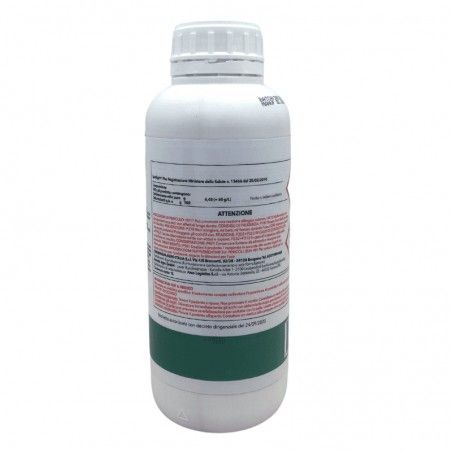
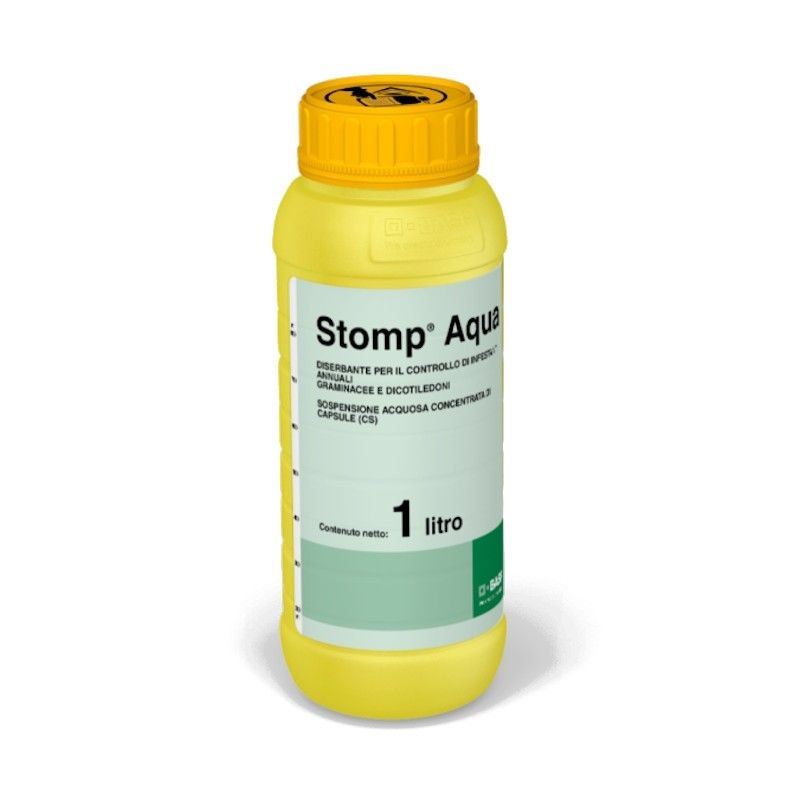
STOMP AQUA BASF Crop Protection selective herbicide for treated crops and capable of inhibiting seed germination and the development of seedlings of both Dicotyledonous and Gramineae annual weeds. LICENSE
For plant protection products
For plant protection products:
--WARNING-- Before purchasing plant protection products, always consult the updated label on the website: http://www.fitosanitari.salute.gov.it/fitosanitariwsWeb_new/FitosanitariServlet as the registrations may change and be different from what is reported in the description on the product page.
STOMP AQUA isa rbicide for the control of dicotyledonous weeds and annual grasses for all extensive, fruit, horticultural and vine crops
Stomp Aqua herbicide is selective towards the treated crops and is able to inhibit seed germination and the development of germinelli of the most important annual weeds, both grasses and dicotyledons. Stomp Aqua also controls weeds in the seedling stage, as long as the grasses have not passed the 1-1.5 leaf stage and the dicotyledons the 2-3 true leaf stage.
How to use:
Stomp aqua, should not be incorporated into the soil (except for Soybean). It is recommended to use the highest doses on clayey soils. It is compatible with herbicides containing Chlortoluron, Dicamba, Dimethenamide, Glyphosate, Linuron and Terbuthylazine.
Warnings:
From the herbicide treatment, allow at least 6 months to pass before sowing new crops. No risk exists for subsequent transplant crops. In the case of forced reseeding on land already treated with Stomp aqua, avoid contact of the new seeds with the herbicide, reseeding at the suggested depths, without removing the soil or after ploughing at least 20 cm deep. Ploughing is necessary if you prefer to sow Sugar beet, rather than reseeding the treated crop.
Product Specifications:
Record Number: 13093 Brand: BASF ITALIA Active Ingredient: Pendimethalin 38.72% Formulation: Aqueous Suspension Capsule Concentrate Category: Herbicides Toxicological classification: N - Hazardous to the environment
Doses, times and methods of use:
GARLIC: 2–2.5 L/ha, pre-emergence or post-emergence (from 2 leaves);
PEANUT: 2-2.5 L/ha, pre-emergence;
ASPARAGUS: (only on planted asparagus): 2-2.5 litres/ha, pre-reloading;
ARTICHOKE: 2-2.5 L/ha, pre-emergence or pre-regrowth or, on vegetation crops, only in the inter-rows and around the vines;
CARROT: 2-2.5 L/ha, pre-emergence or post-emergence (3-4 leaves);
CABBAGE: 2-2.5 L/ha, pre-transplant;
GEAK: pre-emergency; 1 L/ha in loose soils and 1.75 L/ha in clayey soils;
ONION: 1.5-2 L/ha, pre-emergence or pre-transplant (up to 1 day before) or post-emergence (starting from 2-3 leaves);
BEAN and GREEN BEAN: pre-emergence, 1 L/ha in loose soils, 1.75 L/ha in clayey soils;
FAVA BEANS and FIELD BEANS: pre-emergence, 1.5 L/ha in loose soils, 2 litres/ha in clayey soils;
FENNEL: 2-2.5 L/ha, pre-emergence (do not use on sandy soils) or pre-transplant or post-emergence or post-transplant;
SUNFLOWER: 2-2.5 litres/ha, pre-emergence;
WHEAT, BARLEY, RYE: 2-2.5 L/ha, pre-emergence or post-emergence (2-3 leaves);
LETTUCES and SIMILAR (except ROCKET), WITLOOF: 1 – 1.5 L/ha, pre-transplanted, for lettuces; 1.5 - 2 L/ha, pre-transplant, for other salads; CORN: 2-2.5 L/ha in pre-emergence or 2 L/ha in post-emergence (2 leaves);
ORNAMENTAL PLANTS also in the NURSERY: 2 L/ha, post-transplant, in the inter-rows or between plants; POPLAR: 2-2.5 L/ha, post-transplant;
PEA: 2-2.5 L/ha pre-emergence (the highest dose for autumn-sown crops);
TOMATO: 1-1.75 L/ha, pre-transplant;
RICE sown dry: 2- 2.5 L/ha, pre-emergence or post-emergence (2-3 leaves before submersion);
SOYBEAN: 1.5-2 L/ha, pre-sowing with incorporation or pre-emergence; T
ABACCO: pre-transplant, 1-1.75 L/ha in loose soils, 2-2.5 L/ha in clayey soils;
LAWNS: 1.5-2 litres/ha, post-emergence;
VINE, APPLE, PEAR, PEACH, NECTARINE and APRICOT (do not use on sandy soils): -2.5 L/ha, in winter and in pre-emergence of weeds;
On SUNFLOWER, CORN and TOBACCO, use the highest dose on very clayey soils or soils rich in organic matter, or if heavy infestations of Sorghum halepense from seed, Panicum dicothomiflorum or Cruciferous plants are expected. In the post-emergence of crops, intervene in the very early stages of weed development, when they are still very sensitive.
Instructions for use and preparation of the mixture:
To allow Stomp aqua to best perform its herbicide activity and its selectivity towards crops, follow these operating methods:
Prepare the seedbed well in order to operate on well-leveled soil free of clods, such as to form a uniform and compact mass;
if it does not rain within 7-10 days of treatment, irrigate in such a way as to facilitate the penetration of the product into the surface layer of the soil;
sow evenly and regularly at a depth of at least 3 cm for carrots, onions and rice and 4 cm for other crops, taking care to prevent some seeds from remaining uncovered or on the surface of the ground;
in the case of transplanted crops (artichoke, cabbage, fennel, eggplant, pepper, tomato, tobacco), treat on well-prepared soil, perform light irrigation immediately afterwards and wait at least 7-8 days before transplanting, after which it is necessary to perform another light irrigation: in no case should the seedlings be topped up before at least 30 days have passed since treatment;
in the case of poplar planting, treat after the transplant crisis and after verifying that the bark of the stems, in the collar area, is intact and well suberified;
dissolve the necessary dose of product in a little water and, continuing to stir the mixture, then add the quantity of water (from 200 to 400 L/ha, depending on the type of pump used) sufficient to ensure complete wetting of the soil;
distribute the mixture without incorporating it (with the exception of soybeans in pre-sowing) and evenly, so as to avoid gaps and overlaps;
After distribution, thoroughly wash the equipment, utensils and containers used for dilution and use of the product with soap and water.
Ho una coltivazione di cipolle rosse infestate da poa. Cisa posso usare e in che dosi? Grazie
Answer:
Sì, STOMP AQUA è registrato anche contro Poa annua (fienarola) ed è uno dei diserbanti più utilizzati per il controllo delle infestanti graminacee nella coltivazione della cipolla.
Su cipolla rossa, STOMP AQUA può essere impiegato alla dose di:
1,5 – 2 L/ha
Il prodotto può essere utilizzato:
in pre-emergenza;
in pre-trapianto (fino a 1 giorno prima);
oppure in post-emergenza della cipolla, a partire dallo stadio di 2–3 foglie.
Generalmente si utilizza con un volume di acqua di circa:
400 L/ha
STOMP AQUA agisce principalmente sul terreno, bloccando la germinazione e lo sviluppo iniziale delle infestanti. Per ottenere una buona efficacia contro la Poa annua, è importante intervenire su infestanti giovani e con terreno ben preparato.
Il prodotto controlla sia infestanti graminacee che numerose dicotiledoni annuali, risultando molto utile nelle prime fasi della coltura della cipolla.
Giuseppe on 06/07/2025
Question: stomp acqua con roundup power, volevo sapere se si possono usare su un tappeto erboso infestato da euforia
Salvatore mastino on 15/05/2025
Question: Salve, vorrei sapere la dose in 100 litri di acqua, su melanzane, pomodoro, fagiolini, pre trapianto, terreno un po' argilloso, grazie attendo risposta
Michele on 10/04/2025
Question:
Posso usare stomp aqua nella asparagia di 2 anni? Con asparagi già usciti? Grazie
Answer:
Ciao Michele, Sì, Stomp Aqua si può usare su asparagiaie di 2 anni, ma solo in fase di prericaccio, ovvero prima dell’emissione dei turioni.
Se gli asparagi sono già usciti, non è consigliabile trattare, perché il prodotto agisce sul terreno e potrebbe causare danni alla vegetazione giovane.
Dose indicata: 2–2,5 litri per ettaro.
Per il tuo caso specifico, con asparagi già fuori, ti consiglieremmo di evitare il trattamento ora e programmare l’impiego alla fine della raccolta, quando potrai intervenire in sicurezza prima del nuovo ricaccio.
Lo staff tecnico di perfarelalbero.it
giuseppe on 17/10/2024
Question:
salve, ho letto nelle domande il dibattito su euforbia prostrat. volevo un diserbo efficace ho visto che avete stomp acqua con roundup power, volevo sapere in che mese applicarlo e le quantità per 100mq grazie
Answer:
Ciao Giuseppe,
Grazie per la tua domanda. Per il controllo efficace dell'euforbia prostrata, è consigliato l'utilizzo di Roundup Power in combinazione con Stomp Acqua.
Ecco le dosi per 100 mq:
Roundup Power: 200 ml da diluire in 10 litri d'acqua
Stomp Acqua: 50 ml da diluire in 10 litri d'acqua
Il periodo migliore per l'applicazione dipende dallo stadio di crescita delle infestanti. Ti consiglio di applicare il trattamento in primavera, quando le infestanti sono nel loro stadio attivo di crescita, oppure all'inizio dell'autunno, prima che le temperature scendano troppo.
Ricorda di applicare il prodotto nelle ore più fresche della giornata e di evitare giornate ventose o di pioggia.
Se hai bisogno di ulteriori chiarimenti, siamo qui a disposizione!
Cordiali saluti, Lo staff tecnico di perfarelalbero.it
Claudio on 26/07/2024
Question:
Qual, è il periodo migliore x trattare il prato, e basta un trattamento?
Answer:
Salve,
dipende dall'entità dell'infestazione.
e comunque i periodi migliori per trattare sono inizio primavera, oppure fine estate.
Fabio on 27/07/2023
Question:
Salve,volevo sapere se una volta data la prima passata sul prato mi avanza prodotto nella pompa,posso ripassare nuovamente sul tappeto erboso?grazie e buonagiornata
Answer:
Salve,
è un problema perché ci potrebbe essere sovradosaggio, questo è uno dei motivi che le case produttrici per tutelarsi, indicano una dose per superfice e non per litro di acqua.
Mauro on 22/03/2023
Question:
Buongiorno, ho un prato erboso seminato a settembre del 2022. Ora volevo applicare lo STOMP AQUA ma volevo domandarvi se era meglio prima tagliare il prato che è leggermente cresciuto. Dopo la prima applicazione ho letto che devo ripetere con un seconda applicazione dopo 40 giorni e poi fermarmi per quest'anno. E' corretto?
Answer:
Intanto Stomp non è previsto l'impiego su aree uso civile, seve comunque ad impedire la germinazione di alcuni semi sia di graminacee e sia di dicotiledoni.
Francesco on 07/11/2022
Question:
Su cipolla trapiantata circa un mese fa avevo fatto lo stomp acqua sul terreno ma a distanza di circa un mese è uscito qualche germoglio di ortica posso eseguire un secondo trattamento? Se è i a che dose ? Grazie
Answer:
Se l'erba è già fuori il diserbo con Stomp non ha nessun effetto. In questa fase di post emergenza precoce può intervenire con il Challenge ad una dose di 1,25 litri ad ettaro se le infestanti non hanno superato la quarta foglia vera. impiegando un volume di acqua di 300-500 litri. Poichè il prodotto deve essere assorbito dalle foglie è consigliabile produrre una soluzione facilmente assorbibile acidificando l'acqua e aggiungendo un bagnate che favorisca l'adesità e la massima cattura di principio attivo , Olio di Soia Max85 alla dose di 200 ml per hettolitri
piero on 11/05/2022
Question:
Salve volevo sapere la dose da usare di stomp Aqua per il tappeto erboso e se dopo l’applicazione è opportuno irrigare . Grazie
Answer:
Salve, 15-20 ml/100mq in 10 lt d'acqua. Ricordati di bagnare bene dopo il trattamento!
Nicola on 02/04/2022
Question:
Buongiorno, volevo chiedere quale il periodo giusto da dare in un tappeto erboso in Piemonte?? E la dose che mi consiglia per 300mq grazie
Answer:
Ciao Nicola, il periodo migliore è durante la fase vegetativa, non c'è un giorno particolare. la dose è 20ml ogni 100 mq
davide on 04/11/2021
Question:
Buongiorno, è possibile utilizzarlo anche per le infestanti nella valeriana? Grazie
Answer:
Non abbamo indicazioni in merito ne tantomeno esperienze, Non so come viene coltivata e in particolare come viene pianta o seminata, se si esegue con trapianto ritengo che un impiego pretrapianto possa essere praticato. é una mia ipotesi, che se ritiene può sperimentare su piccole superfici. C'è comunque la soluzione e cioè semina o trapianto su sodo, consiste nel diserbare il letto di semina inerbito con glifosate, 500-600 cc di Roundup Platinum su 1000 mq, trapiantare o seminare quando le infestanti erbacee sono morte, e dopo una fertirrigazione con Bioplant a 1 -1,5 lt su 1000 mt
on 09/05/2021
Question: La dose per 100 litri di acqua.Grazie
Answer: Le dosi si riferiscono solo a superficie e non a litri
on 08/05/2021
Question: Se uso stomp aqua su un tapetto erboso, lo danneggio o evito solamentei il germogliare delle infestanti?
Answer: Non crea problemi al prato, impedisce la germinazione di semi. Usi l'attenzione di non concentrare molto la soluzione.
on 11/04/2021
Question: Buonasera. Per usare stomp acqua prima del trapianto dei pomodori qual'è il dosaggio giusto per un'irroratrice a spalla di 10 litri? Inoltre si può usare prima del trapianto dei fagiolini? Grazie mille
Answer: si puo, ed è meglio, usare prima del trapianto oppure dopo la semina , la dose va calcolata in base alla superficie, 2 cc ogni 10 mtq
on 22/03/2021
Question: Salve Vorrei acquistare questo prodotto però anche leggendo l'etichetta ho difficoltà a comprendere bene le modalità d'uso. Vorrei usare il prodotto sia per la semina che per il trapianto di orticole. Volevo sapere in modo elementare oltre a come viene utilizzato il prodotto sia per i semi che per.le piantine anche le dosi d'impiego e i tempi di carenza (atomizzatore 15lt). Non vorrei bruciare i semi di piccola e media taglia (esempio rucola/fagioli) e le piantine. Grazie per la disponibilità e cordiali saluti
Answer: Buonasera, intanto un'indicazione generalizzata non possiamo darne. Su rucola il prodotto non è registrato, mentre su fagiolo lo può usare solo in pre-emergenza dei semi infestanti e pre-emergenza del fagiolo se seminato, se invece è stato trapiantato si può usarlo in pre-trapianto.
on 14/03/2021
Question: Salve si può utilizzare nelle cipolle dopo aver effettuato la sarchiatura ?danneggia la pianta?
Answer: Buon giorno, si puo fare quando ha emesso 3 o 4 foglie, se può seguire una irrigazione leggera è meglio. Comunque non danneggia
on 11/03/2021
Question: Salve vorrei sapere gentilmente quanti gradi minimo ci devono essere x dare l' antigerminello nel prato? 14 sono ancora pochi?
Answer: Buon giorno, in genere si parla di temperatura media, 14 temperatura media è ottimo, comunque primavera è arrivata e le piante sono in vegetazione, anche i semi germinano, in questo mese già si può agire, il prossimo ancora meglio
on 07/03/2021
Question: buongiorno. vorrei usare lo stop Aqua per il prato. avendo un cane che ci cammina quotidianamente può essere nocivo?, nel caso ci sono disposizioni da seguire? grazie
Answer: Buon giorno, come tutti i prodotti chimici è meglio evitare sia il contatto che l'assunzione, sul prato dopo averlo somministrato, con una buona irrigazione, lo deve far scendere a contatto con la terra , necessario per farlo funzionare, per cui sulla foglia rimane poco o niente e quindi nonverrebbe a contato con il suo cane
on 25/01/2021
Question: Nel caso di patate e fagioli prima si semina sotto terra e poi si distribuisce sopra il prodotto? o capito bene?
Answer: Si, ha capito bene, prima la semina e subito dopo il trattamento, prima dell'emergenza delle infestanti.
on 25/01/2021
Question: Non c è un video per vedere come si utilizza?
Answer: al momento i video su youtube sono tutti in inglese
on 25/11/2020
Question: Se lo uso su un prato di dicondra x impedire che in primavera spuntino erbacce, in particolare trifoglio rosso, non c'è il rischio che bruci la dicondra, essendo anche un diserbante? e in che periodo farlo?
Answer: va usato a dose massima di 20 cc in 10 litri di acqua non ustiona, la dose per superficie e di 2 cc per 10 mq, se rispetta le dosi non avrà problemi.
on 12/10/2020
Question: Buongiorno. Vorrei sapere se Stomp aqua ha una scadenza, perché Un mese orsono non ha funzionato. E nata molta erba. Dipende da me? Grazie Luciano
Answer: non scade, sono molte le cause che possono determinare un cattivo risultato,- Potrebbero essere erbe che normalmente non sono controllate da Pendimetalin
on 21/07/2020
Question: Salve, vorrei sapere se è efficace sulla cuscuta e sino a che stadio riesce a controllarla ? Grazie
Answer: Buon giorno, Stomp non la controlla. può invece impiegare Kerb Flo
on 08/04/2020
Question: Buongiorno. Vorrei sapere se è possibile usare STOMP AQUA in post trapianto su pomodori e peperoni isolando le piante. Grazie
Answer: Buon giorno, si può usare , ma non è ammesso su peperoni. Occorre avere cura di trattare prima dell'emergenza dell'infestante
on 02/03/2020
Question: Buongionro, applicando STOMP AQUA i primi di marzo in un tappeto erboso già nato (seminato a settembre dell'anno precedente) per bloccare la germinazione delle infestanti, dopo quanto tempo è possibile spargere qua e là il seme per tappare eventuali buchetti dove la prima semina non è andata a buon fine? Grazie saluti
Answer: Buon giorno, può dare Stomp dopo la semina, irrigare subito dopo , serve a far germinare i semi , Stomp agisce sui semi nella fase di germiazione.
on 23/01/2020
Question: Buongiorno ci sono pericoli per i trapianti di pomodoro e fagiolini? Il trapianto va fatto 7 giorni dopo il trattamento? Grazie
Answer: Buon giorno, non c'è alcun pericolo, magari c'è di avere cura di non muovere il terreno, giusto l'indispensabile, per non interrompere la copertura effettuata con Stomp
on 02/10/2019
Question: Cerco un prodotto diserbante da usare in pre impianto in filari di piantine di eucaliptus 3 x 1 mt in 6 ettari Vorrei conoscere i relativi costi e le modalità di impiego. FORNARI GIOVANNI Manciano ( GR) gianni.fornari10@gmail.com cell 3358229158
Answer: Buon giorno, stomp può essere adatto per quell'impiego. Si impiega a massimo 2 litri ettaro prima dell'emergenza delle erbe,la quantità di soluzione per ettaro è relativamente importante, 1000 litri per ettaro. il prezzo è pubblicato sul nostro sito
on 09/09/2019
Question: Vorrei seminare gli spinaci, ma se Stomp Aqua impedisce la germinazione delle erbe, impedirà anche la germinazione del seme di spinaci. Come mi devo comportare? Grazie
Answer: Non è previsto, e non può essere impiegato su spinaci, Non è selettivo per questa coltura
on 05/09/2019
Question: Salve è possibile usare il prodotto su finocchio cicoria insalate in post-emergenza?
Answer: Buon giorno, su lattughe e finocchio, post emergenza del finocchio, ma pre emergenza delle infestanti
on 13/08/2019
Question: Buongiorno, per un trattamento antigerminante di un prato erboso di 300 mq, quanti ml di prodotto devo utilizzare? Credo di riuscire con 15 litri di acqua a coprire tutta la superficie. grazie
Answer: Buon giorno, sono necessari massimo 60 cc , la quantità di acqua di 15 litri potrebbe essere sufficiente, una maggiore quantità è consigliabile per far scendere la soluzione a livello del suolo. Quindi anche 3 o 4 volte tanto di acqua. Stomp sempre 60 cc
on 03/07/2019
Question: buongiorno, vorrei sapere se è possibile fare il trattamento sulle patate dopo la rincalzatura e se il prodotto può danneggiare la foglia della patata. Grazie per la vs professionalità
Answer: Buon giorno , lo può fare , a scanso di errori le consiglio di diluire la dose ettaro in almeno 1000 litri di acqua, se 2000 meglio. Otterrà una uniforme distribuzione, e zero rischi di ustioni.
on 28/06/2019
Question: Ho un prato di 200 m3 ed è infestato da euphorbia prostrata. Sono un privato e non ho nessun patentino. Cosa mi consigliate di fare per eliminare la maledetta infestante ? Distinti saluti e grazie per la risposta.
Answer: Buon giorno, stomp può servire come antigerminello per i semi di quest'erba, se vuole distruggere la pianta può usare Rounduo Platinum insieme a Stomp e avrebbe una azione diserbante insieme ad una azione antigerminante
on 21/05/2019
Question: Buon giorno grazie per la risposta , vorrei trattare con questo prodotto piante ornamentali e forestali , in vasi di diametro 20 cm Grazie
Answer: Le do una indicazione di massima, prepari un soluzione di un litro di acqua con 2 cc di Stomp acqua, e con questo litro spruzzi la superficie del terriccio di 30 vasi. Si fa in assenza di erba, con terreno umido. Potrai irrigare dopo un paio di giorni.
on 20/05/2019
Question: Buona sera , va bene per le piante in vaso ? Può dirmi la dose per 10 litri di acqua Grazie
Answer: Buon giorno, va bene per le piante in vaso, ma si tratta di fare microdosi, Stomp si impiega al massimo 2 litri su 10.000 mq, Come posso suggerirle la dose per un vaso? Se poi mi spiega meglio di che vasi parla, di che cultura forse le posso suggerire una soluzione.
on 22/03/2019
Question: Buon pomeriggio, volevo sapere se Stomp Aqua va bene per effettuare il diserbo post emergenza per il frumento o va aggiunto un altro prodotto per effettuare un trattamento completo?
Answer: Buon giorno, Stomp è solamente antigerminello, si impiega prima dell'emergenza delle erbe infestanti, non capisco come lo vorrebbe o potrebbe impiegare per il diserbo del grano, magari in preemergenza del grano, dopo la semina
on 12/03/2019
Question: È possibile usarlo su melone post trapianto?
Answer: Non è registrato su cocurbitacee.
on 16/02/2019
Question: Buongiorno. Ho già seminato l'aglio da due giorni, quando gli posso dare lo Stomp aqua? Grazie saluti Bolognesi
Answer: Buon giorno, il prima possibile, prima che emergano le erbe da seme. F.Quinto
on 28/01/2019
Question: lo stomp acqua è efficace sulle cuscute della medica ,il periodo più. adatto per il trattamento grazie
Answer: Buon giorno, non è registrato l'impiego di Stomp su erba medica, è invece registrato Kerb Flo F.Quinto
on 12/12/2018
Question: Su pisello, fino a quanto tempo dopo la semina è possibile applicarlo, senza danneggiare il seme? È escluso del tutto il trattamento post-emergenza? Grazie
Answer: Lo stomp aqua è un antigerminello quindi evita la nascita delle piante infestanti. Applicarlo prima della semina evita che le infestanti possano germinare. Poi dopo aver piantato la coltura, dopo l'emergenza e dopo la formazione delle prime foglie vere si può fare un secondo intervento ma sempre prima che le infestanti siano germinate. In sostanza si può agire solo sui semi che stanno per germinare, una volta che le piante sono nate ed hanno le foglie non ha più alcun effetto. Cordiali saluti.
on 21/11/2018
Question: Salve, posso usare stomp aqua con temperature medie di 10°C, ovvero in questo periodo dell'anno? Vorrei usarlo per il diserbo del lupino dolce e del coriandolo in post-semina
Answer: La temperatura non influisce più di tanto sull'azione diserbante più che altro essendo un antigerminello, dev'essere somministrato prima che le infestanti germinino. In genere l'azione del diserbo nel terreno dura circa un mese quindi se le infestanti non germinano nel giro di un mese dal trattamento non vengono eliminate. Le dosi le trova in etichetta o sulla pagina del prodotto. Cordiali saluti.
on 13/11/2018
Question: Salve, è possibile usarlo anche quando sono già iniziate a nascere le piantine di fave? Sono già iniziate a nascere anche le prime foglie di trifoglio, è possibile miscelarlo anche con un post emergenza? Se si quale? Grazie e buon lavoro
Answer: Se le infestanti graminacee non hanno superato lo stadio di 1-1,5 foglie e le dicotiledoni lo stadio di 2-3 foglie vere, mentre le fave sono almeno alla terza foglia può trattare con successo. Se invece è già in post-emergenza può intervenire solo su graminacee poichè al momento sono pochi i prodotti registrati su fava. Uno dei registrati è il fusilade max. Cordiali saluti.
on 14/10/2018
Question: Quanti ml di prodotto per ogni litro di acqua per combattere la germinazione delle infestanti del prato ? Va usato ogni 60gg? Leggendo i vari post ho letto che non va bene in pre emergenza per la digitaria. Ma se è un antigerminello come è possibile che non vada bene ?
Answer: I volumi d'impiego dipendono dal tipo di somministrazione. Le dosi vanno dai 1,5 ai 2 litri per ettaro da distribuire alla dose massima sui terreni argillosi. Una buona dose per trattare il prato con mezzi non professionali tipo irroratrici a spalla è di 20ml in 10lt di acqua da distribuire uniformemente su 100mq. Essendo un antigerminello selettivo ha dei campi di applicazione specifici per malerbe specifiche. Su prato ha una buona selettività ma la sanguinella digitaria cresce lo stesso. Meglio impiegare Greenex NF in post emergenza per risolvere il problema digitaria. Cordiali saluti.
on 02/08/2018
Question: Mi consigliate X favore un diserbante sia presemina X ortaggi e patate che un diserbate post semina ? Grazie
Answer: Ortaggi è un termine generico. Stomp Aqua è utilizzabile su molte colture, si può applicare anche dopo la semina delle patate ma prima dell'emergenza delle infestanti. Per fornirle indicazioni più precise occorre chiarire che tipo di ortaggi vuole proteggere. Cordialità.
on 31/07/2018
Question: Salve in pre trapianto su pomodoro dopo l applicazione di stomp l irrigazione si può effettuare con impianti a goccia o deve essere fatta per aspersione? Grazie
Answer: Il diserbante funziona quando il seme dell'infestante germina, in assenza di acqua questo, non avviene e di conseguenza il diserbante non funziona. Se utilizza la manichetta l'effetto ci sarà solo dove arrivano le gocce..
on 10/07/2018
Question: URGENTE....in un campo di cipolla tipo tropea sta crescendo in maniera impressionante la portulaca come bloccarla anche con diserbi a circa 15 gg. dalla raccolta? stomp acqua od altro?
Answer: Penso non ci sia soluzione, in questa fase.
on 24/06/2018
Question: se stom aqua in post emergenza danneggia i fagioli grazie
Answer: se hanno tre o quattro foglie vere, e stomp non è molto concentrato, non avrà danni, qualche leggero blocco, ma se c'è il fagiolo germinato, sicuramente c'è anche l'erba, stomp è un antigerminello e non danneggia quindi nemmeno le erbe. Va usato subito dopo la semina, oppure prima del trapianto
Michele on 03/06/2018
Question: Buongiorno, ho il prato infestato dalla setaria. Le infestanti sono nate nelle ultime due settimane. Posso usare stomp acqua che ho già acquistato da voi? in che quantità per 5 litri? Grazie
Answer: Stomp Aqua è un antigerminello, agisce sui semi nella fase di germinazione, per cui va impiegato isubito prima quella fase.
Nino Di Sabatino on 28/05/2018
Question: Buongiorno, va bene per i pomodori. Grazie
Answer: Buon giorno, sul pomodoro o prima del trapianto , prima dell'emergenza delle erbe,
Ivo on 27/05/2018
Question: Quantità di stomp per 10 litri di a cqua per prato. Quando usare il diserbanti?
Answer: La dose è in funzione della superficie, 200 cc per 1000 mq, la quantità di acqua da 60 a 100 litri. Sempre per 1000 mq.
Gina Barbara on 09/05/2018
Question: se il prodotto su melo e pero può essere usato anche d'estate, effettuando una leggera irrigazione dopo il trattamento
Answer: Stomp Acqua non è un diserbante nel senso classico, impedisce ai semi di germinare, quindi se c'è l'erba si deve abbinare a un dissecante, tipo Roundup, o altri. Oppure va impiegato dopo una lavorazione del terreno, agire su terreno umido e far seguire una breve irrigazione.
Donato on 07/05/2018
Question: Buongiorno, chiedevo se è possibile usare il prodotto anche x lo scalogno
Answer: Buon giorno, si può usare pretrapianto, oppure postsemina ,ma sempre in preemergenza delle infestanti.
Paolo on 18/04/2018
Question: Posso usare questo prodotto su un terreno pronto per la semina del prato erboso? Oppure è preferibile attendere che l'erba nasca prima di effettuare il trattamento?
Answer: dopo la semina, dopo 7 giorni affiora il prato, dopo si può intervenire senza rischio di danneggiare le piantine. F.Quinto
Marco on 16/04/2018
Question: Buongiorno, su prato erboso qual'è il periodo più idoneo per il trattamento? Se si tratta di un antigerminello come mai il trattamento dei tappeti erbosi viene indicato post-emergenza? grazie, Marco.
Answer: buon giorno, post emergenza del prato, ma prima dell'emergenza delle infestanti da combattere
Loris on 07/03/2018
Question: Buonasera volevo sapere se è indicato stomp aqua per i fagioli e se meglio in pre o post emergenza e la dose litro grazie mille
Answer: Buongiorno, si può impiegare in pre emergenza se seminato. In pre trapianto se trapiantato. Le dosi sono riportate qui: https://www.agro.basf.it/agroportal/it/media/migrated/product_files/labels_2/ETI_STOMP_AQUA.pdf
on 17/02/2018
Question: Buongiorno volevo sapere se il trattamento con stomp aqua può danneggiare un prato seminato a settembre con trifoglio. Ho acquistato il prodotto da voi ma vorrei questa informazione prima di usarlo. Grazie
Answer: Buon giorno, Stomp agisce solo su semi in fase di germinazione, se usa dosi prescritte non avrà alcun danno. F.Quinto
on 12/02/2018
Question: Buongiorno, ho seminato a settembre una mistura di sementi "sottovigneto" comprendenti microterme ma anche il trifoglio nano che è nato ma che nella stagione fredda è andato in dormienza. Trattando il giardino con questo prodotto rischio di compromettere il trifoglio nato in autunno? Vorrei usare stomp aqua per evitare sopratutto infestamenti da digitaria e tarassaco. Aspetto una vostra gentile risposta. Grazie
Answer: Buona sera, Con Stomp può controllare la germinazione di semi di alcune infestanti, Potra controllare solo la germinazione dei semi di tarassaco, non di digitaria. F.Quinto
on 06/02/2018
Question: Salve vorrei sapere se questo erbicida è andatto anche per lo Zucchino e se è possibile utilizzarlo in serra. Grazie Mille
Answer: buon giorno, Stomp non è registrato ne è utilizzabile me pre ne post traopianto di zucchino o cocurbitacce. F.Quinto
Giuseppina Logozzo on 24/11/2017
Question: se è adatto al diserbo in pre-emergenza della lenticchia e in che dosi. Grazie
Answer: Buon giorno, Stomp non è registrato su lenticchie sebbene pentimetalin (il principio attivo di Stomp) è registrato. Da pochi giorni è stato registrato un prodotto, a base di pendimetalin, registrato su lenticchie. Il nome commerciale è CINDER, non lo abbiamo ancora a magazzino, ma sarà disponibile entro pochi giorni . F.Quinto
on 23/11/2017
Question: Salve Ho un selciato in sampietrini e le stuccature tra un sasso e l'altro con il tempo sono saltate esponendo la terra e la sabbia o pozzolana sottostante. Il prodotto sarebbe adatto per evitare la crescita delle malerbe? È miscelabile con glifosato? Grazie
Answer: Buon giorno, Stomp sarebbe adatto al suo scopo, ed è miscibile con glifosate, esistono in commercio prodotti simili a stomp ma con maggiore persistenza e più ampio spettro di azione, le suggerisco GOAL, che va impiegato alla dose di 100 massimo 200 cc per 1000 mq, si può impiegare in abbibamento a glifosate , necessario in presenza di erbe perennanti. F.Quinto
Moreno on 19/10/2017
Question: Si puo' usare su carote con foglie di 10cm se si non compromette la sicurezza alimentare?
Answer: Il prodotto è registrato su carota e si impiega : 2-2,5 L/ha, pre-emergenza o post-emergenza (3-4 foglie); tempo di carenza: 60 GIORNI
Fabrizio on 18/09/2017
Question: salve ho un prato inglese seminato a Luglio 2017, ora in seguito all' eccessivo caldo di quast'estate e alle frequenti bagnature per favorire la crescita del prato si è avuto uno scoppio di infestanti in particolare la Portulaca. avete disserbante selettivo per eliminarla? Grazie
Answer: Buongiorno, il prodotto utile per abbattere l'infestante in questione potrebbe essere l' U46 Prati, oppure il Dicotex in confezione piu piccola. un'azione molto risolutiva si può avere anche con Spotlight, alla dose di 75 cc per 100 litri di acqua, che distrugge portulaca ed altre erbe a foglia larga
Emanuele on 16/09/2017
Question: Buongiorno, io metto cipolle, il vostro prodotto si può usare per via aerea con moto pompa diluito in acqua? Tipo diserbante normale. Grazie
Answer: Può esser applicato con queste modalità nelle seguenti epoche e dosi: 1,5-2 L/ha, pre-emergenza o pre-trapianto (fino a 1 giorno prima) o post-emergenza (a partire da 2-3 foglie). Stomp è un antigerminello, si deve usare prima del trapianto, oppure dopo quando la piantina ha superato lo stress da trapianto, ma prima che escono le erbe infestati perché stomp non le distruggerebbe, Se ha bisogno di sapere altro non esiti a scriverci. Distintamente, F.Quinto
silvano on 13/07/2017
Question: per 2.500 mq. di prato, in base alle istruzioni, ho previsto Lt. 0,440 di STOMP AQUA diserbante selettivo. Per l'irrigazione di Stomp Aqua uso una pompa apposita con serbatoio di 50 Lt, ma nelle istruzioni non è indicata la quantità di acqua in cui versare il diserbante. Cortesemente mi potete aiutare comunicandomi la quantità di Stomp Aqua per ogni 10 Lt. di acqua?? Grazie e distinti saluti
Answer: per 2.500 mq. di prato deve utilizzare 100 litri di acqua. Se deve impiegare in totale 0,4 litri di STOMP AQUA in 100 litri di acqua, per ogni 10 litri ci vorranno 0,04 litri di diserbante.